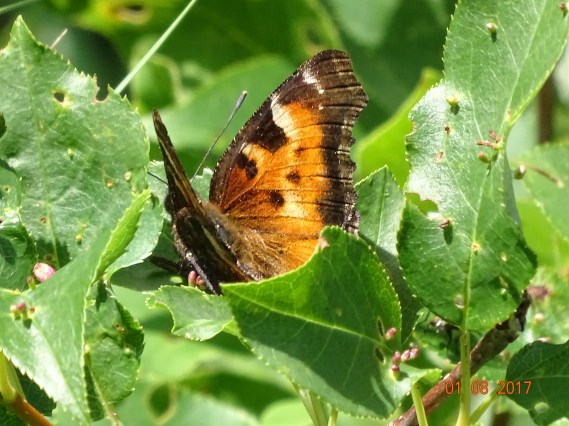
Adelpha! My fourth sighting in thirty years of observation.

Adelpha bredowi, the Sisters butterfly, is a species of the southwestern U.S. and Mexico. By 1981, Ferris and Brown had recorded specimens from eight Colorado counties, mostly in the southwestern corner of the state, but including El Paso and Douglas.

DSC04289.jpg

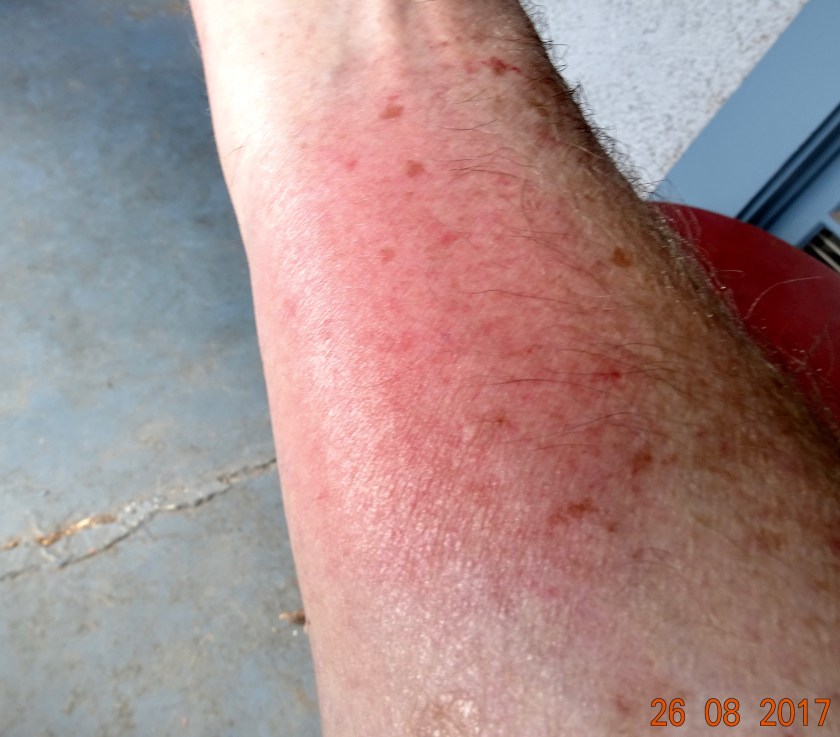
Although the foodplant is oak, which is abundant here, the species does not appear to thrive this far north. I never found it in my early years (1959-1983), but it has shown up four times since 2001. One of these records was a dead specimen on a street in Broadmoor (29 August 2003), where it was killed by a passing car. Two others are from Bear Creek Canyon (2 June 2001 and today, 25 August 2017), and the fourth is from an ephemeral pond immediately west of the large, disused landfill northwest of Bear Creek Road (26 June 2005). The June and August dates might suggest a double brooded species, or it might have a very long flight period. My suspicion is that as the autumns get longer and the springs get earlier, this species might be more often encountered here. I paid for this spectacular find, however, by stepping in a yellow jacket nest. They got me five times before I could escape. Here it is on my forearm, twenty-four hours later, even after aloe vera and benadryl cream. Geez.

DSC04296.jpg

Baculite Mesa, Pueblo County, a great place for bugs and spiders.

Here’s a few photos and a short video of trying to coax a tarantula out of her burrow.

Baculites are fossil cephalopods that formed long rod-shaped “bones,” much like the inner shell of a modern squid. The largest ones may be several feet long, but here at Baculite Mesa they are mostly small specimens.DSC04123.jpg

Here is one of the several preying mantises we found, a male.DSC04128.jpg

And the group, working on the tarantula burrow. We found several at home, but not eager to step into the sunlight.DSC04105.jpg

Here is a mating pair of Phyciodes picta, a desert version of the foothill pulchella. It seems to be common in Pueblo County. We found scores of them.DSC04119.jpg

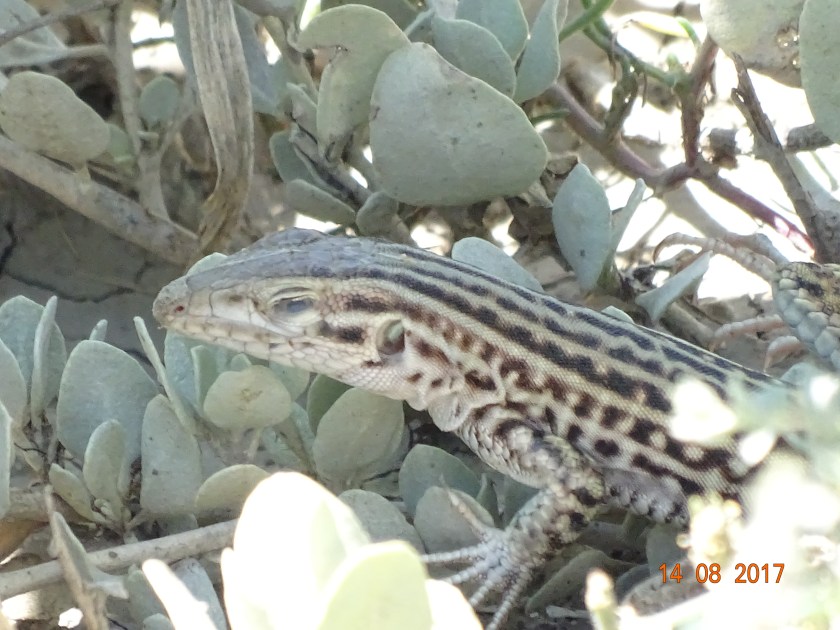
And a whiptail lizard, apparently sleeping through our disturbances.DSC04129.jpg

And even birds, although besides the pond-side doves and killdeer, there were few. Here’s a rock wren, the best photo I could get as it kept moving.DSC04121.jpg

Moth Traps and Fisher’s Alpha Index of Diversity

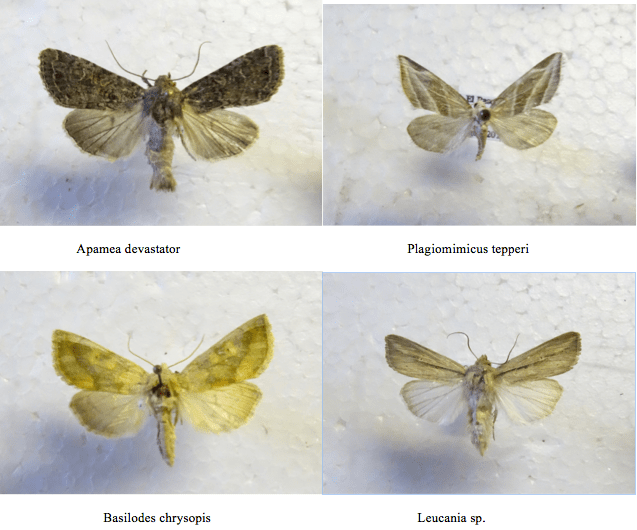
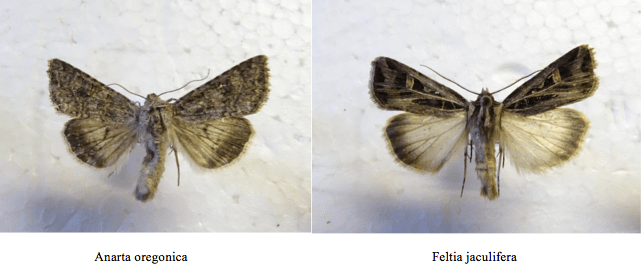
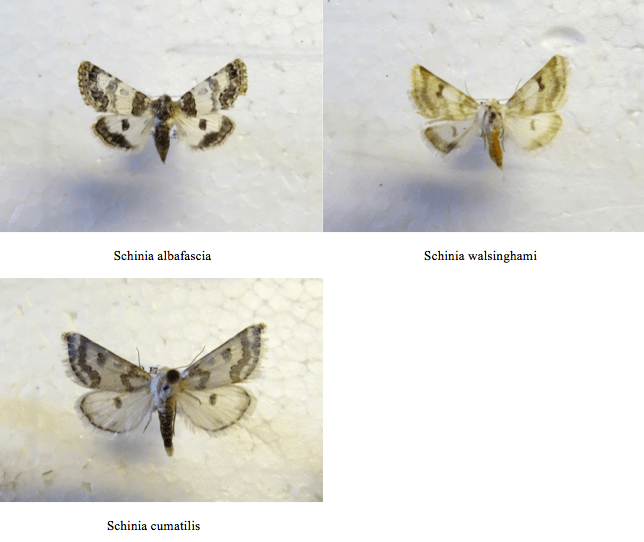
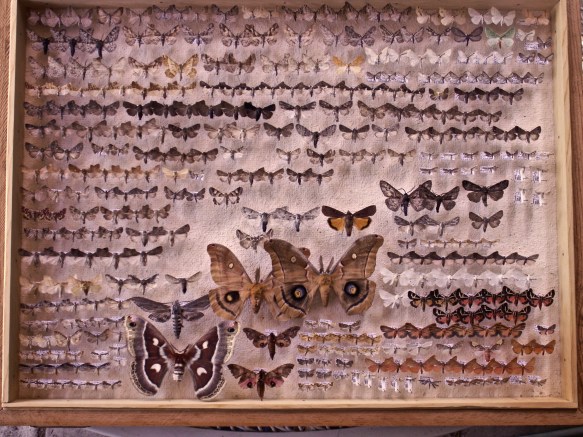
Here is a one-night collection of moths from Rock Creek, taken with a small blacklight trap late in June, 2008.

PICT0003.jpg

It includes about 120 species. By contrast…

For those of you who were there, and curious, and for others who may find this of interest, my little moth trap in Rock Creek on the night of 12 August captured a measly 50 species and 169 individuals. This is a very poor night by any measure. But it all adds up. When I combine several nights (all better than this one) I find a current total of 260 species and 2494 individuals. This produces a Fisher’s Alpha score of 73, which can be used to further estimate the moth biodiversity of this site. Because each doubling of the sample size would theoretically increase the species numbers by (0.693)(alpha), doubling the sample size 50 times, which would mean an exhaustive study, estimates about 2789 species.

A similar study done at the Catamount Field Station south of Woodland Park produces a Fisher’s Alpha score of about 56. Doubling this sample 50 times produces an estimate of about 2227 species of moths. This is close to theoretical, as species diversity diminishes with altitude. Rock Creek is at about 6000 feet, while Catamount Field Station is close to 9000 feet.


Mushroom Time

The mountainsides are bubbling up with mushrooms as always at this time of year, but the heavy rains of July and August have brought up a bumper crop. Here are a few. I’ll follow with some names as I get feedback from the Mycological Society of Colorado Facebook group. The diversity is stunning. I think we found 33 species on this one hike.

DSC03988.jpg

The Mycological Society seems to be more about edibles and hunting for dinner, so they’re not much help so far. I’ve tracked down a couple of leads. The little white ones above might be Parasolus, parasol mushrooms.

The one below was called Cystoderma amianthinum by The Mushroom Identification Forum.

DSC04008.jpg

DSC04000.jpg

And this one was identified to genus, Thelephora.White fringed purple

This is probably a Russula species, maybe versla.DSC04071.jpg

DSC04062.jpg

And the big ones, below, are all Polypores. Those little creamy ones are still a mystery.DSC04026.jpg

DSC04041.jpg

White polypore 2 underside

Wavy polypore

Even in a poor year…

The butterfly sights in Bear Creek are worth waiting for, even in a season that has been damaged by extremely early emergents, late hard freezes, and the wettest July on record, including a couple very heavy rains in Bear Creek. Here are a few beauties. First, Polites mystic, the mystic skipper. I feel pretty mystical when I find one.mystic

Not to be confused with Ochlodes sylvanoides, the sylvan skipper. These look similar, but note the very black “stigma” on the mystic skipper. The sylvan’s stigma is brown, and less imposing.sylvanoides

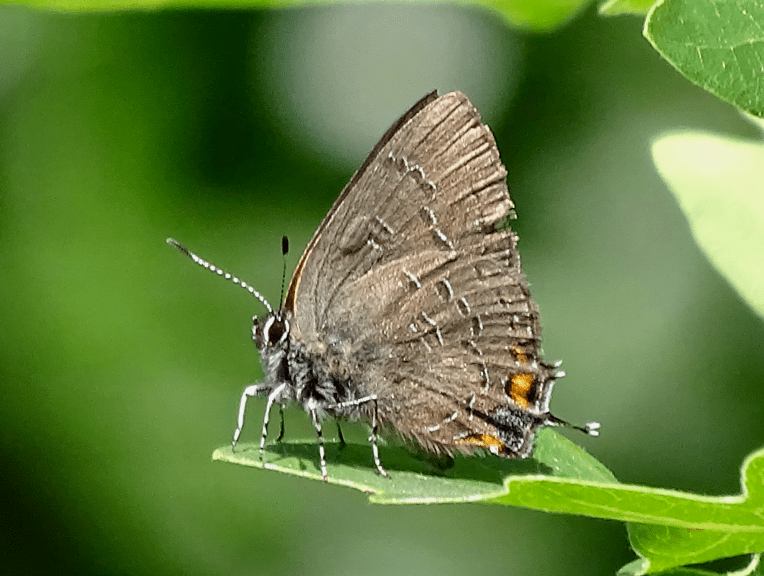
This is the banded hairstreak, Satyrium calanus. It was one of only two species of Lycaenidae, or gossamer winged butterflies, I saw all day. I love his six-point stance, like a linebacker.calanus
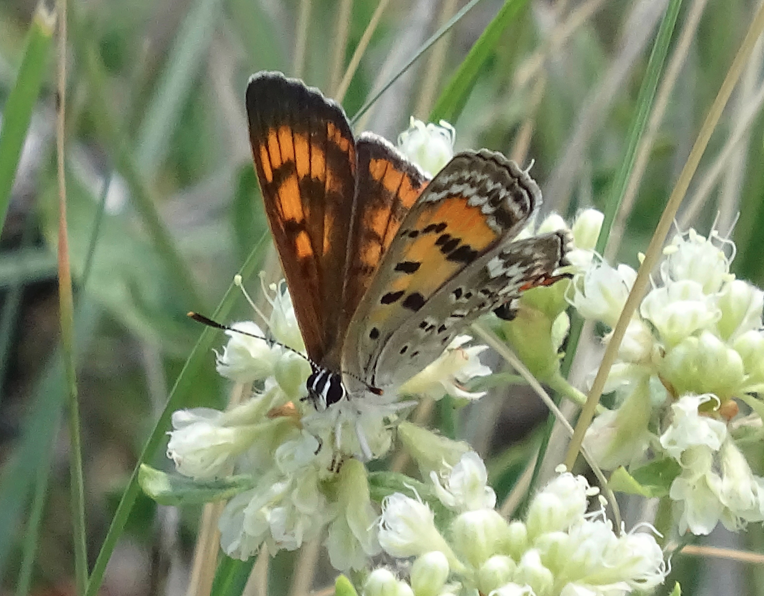
The other Lycaenid was the tailed copper, Lycaena arota. This one is taking nectar from Eriogonum (wild buckwheat) flowers.arota.png
And last for today, a police car moth (one of the better named species!), Gnophaela vermiculata.vermiculata.png

Bear Creek, reprise

It’s a poor summer for butterflies in Bear Creek, but here’s Speyeria aphrodite, a big female, on the flowers of Monarda fistulosa.DSC03919

And one of the true rarities in El Paso County: Nymphalis californica, the California tortoiseshell butterfly, my third record in 30 years.DSC03911.jpg

Spreading dogbane (Apocynum androsaemifolium) is setting fruit.DSC03917.jpg

And I told you once before, but I’m telling you again, the wild raspberries are going fast. Get ’em while they’re ripe!DSC03914.jpg