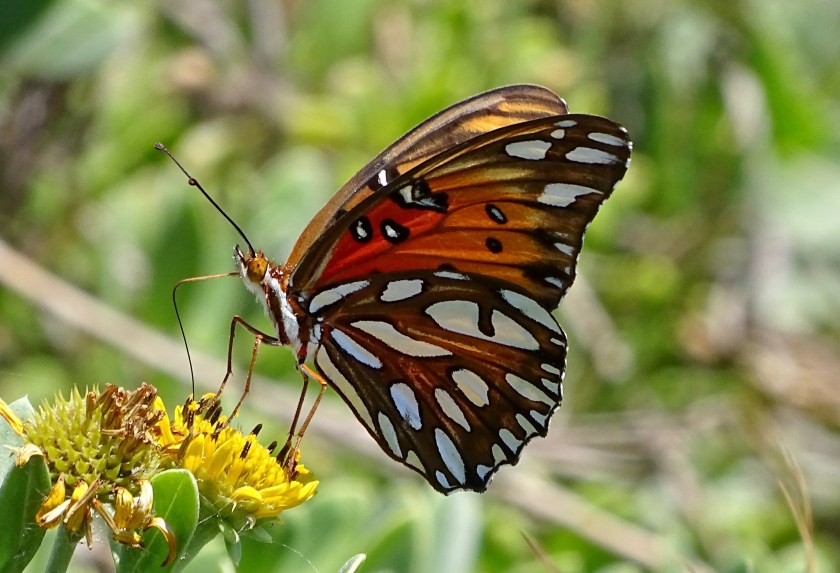
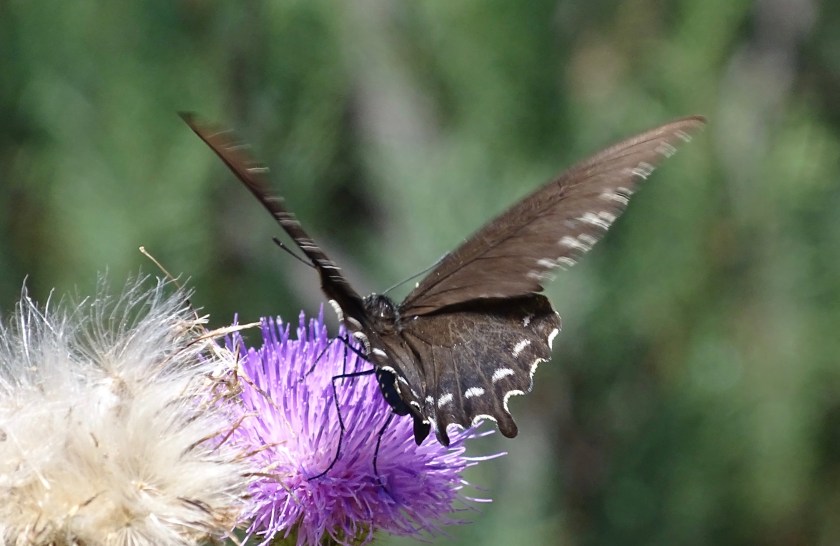
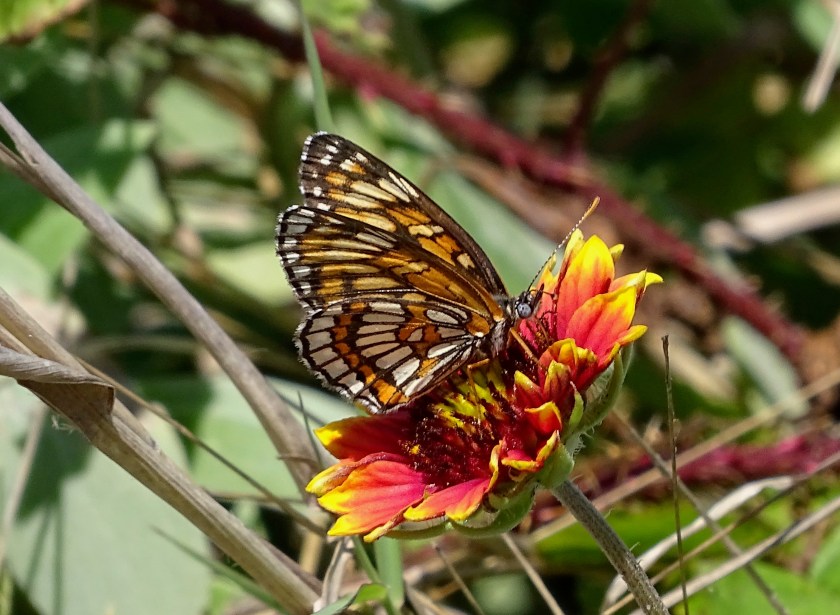
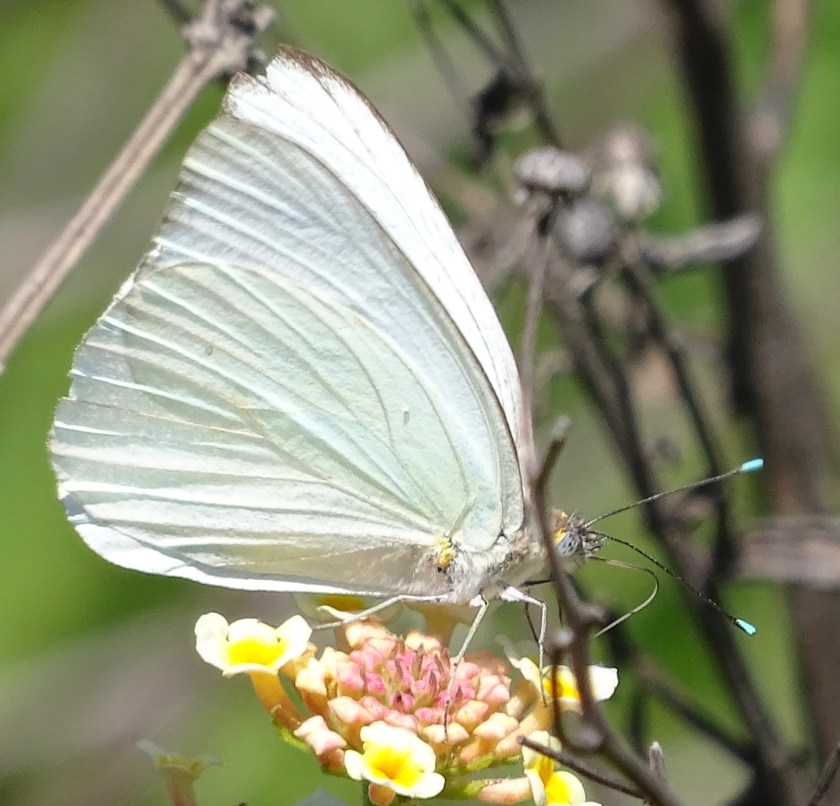
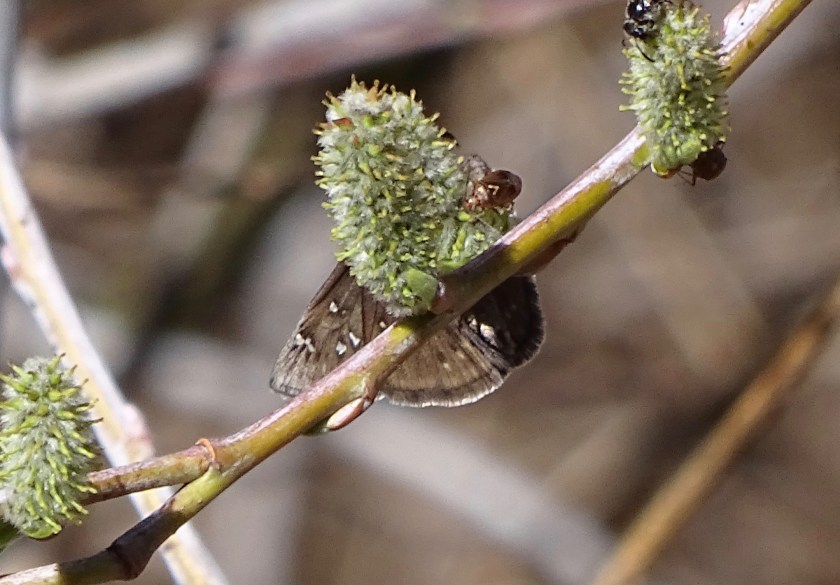
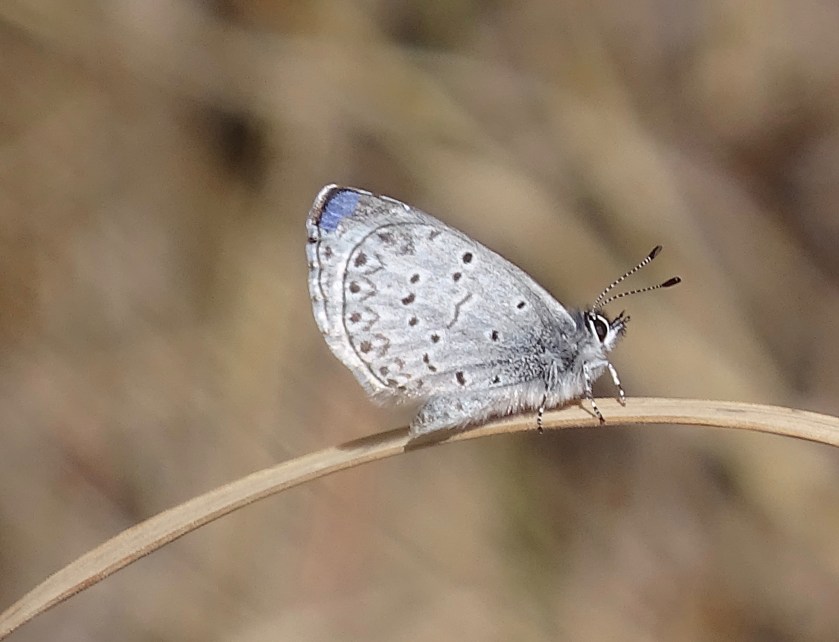
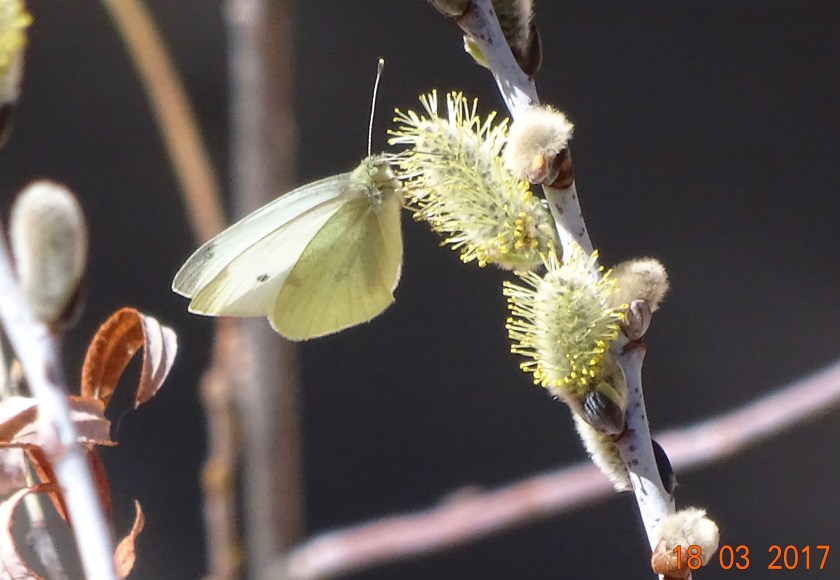
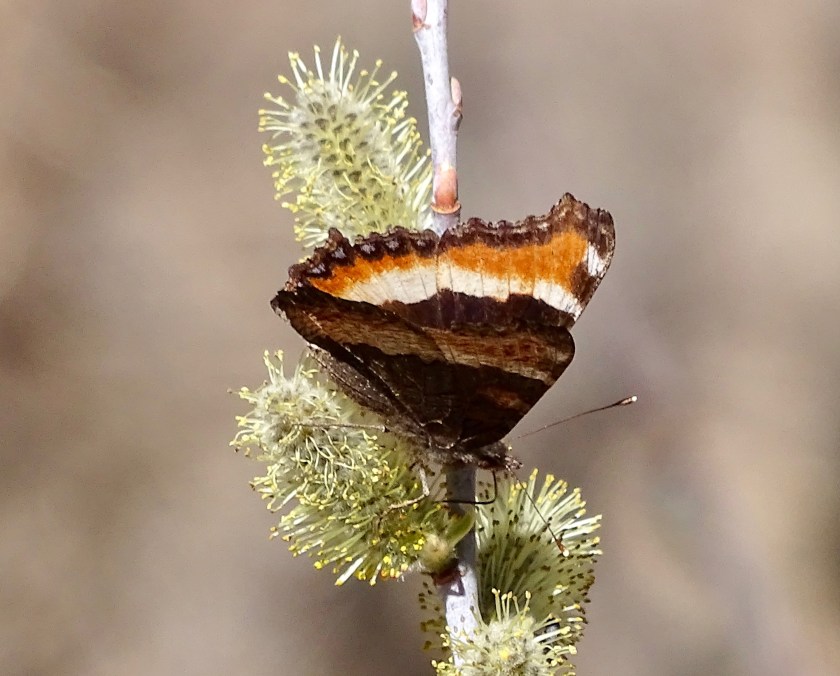
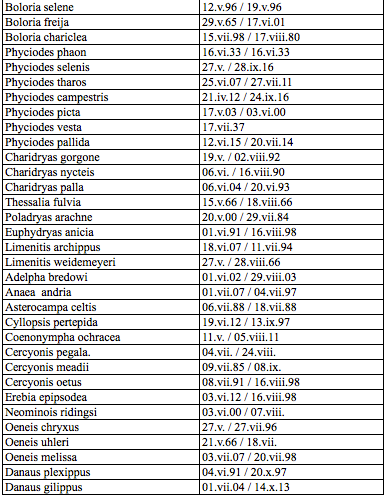
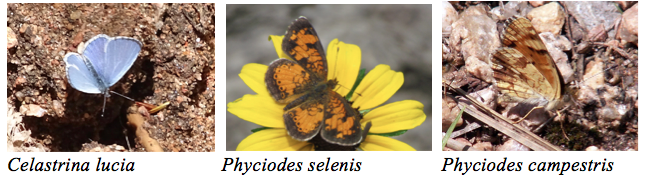
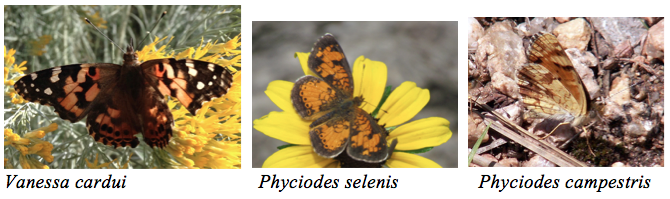
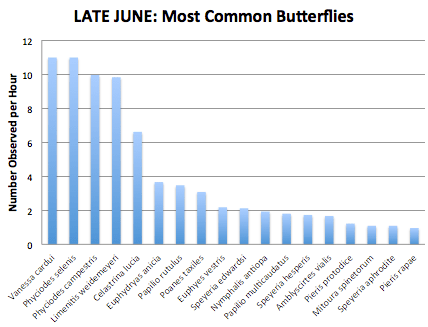
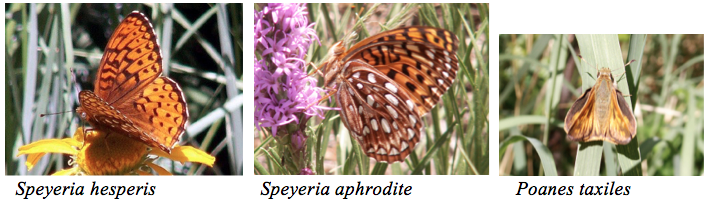
Here are graphs showing the 18 most abundant species of butterflies in each summer month or half-month. These are based on 23 years of observations of tens of thousands of butterflies. The y-axis shows the numbers of butterflies noted per hour of observation time. This is a historic record, and I understand that many readers will not know the scientific names of these butterflies, but I am illustrating the three most common above each graph. Nymphalis antiopa, the mourning cloak, hibernates as an adult and flies on the warmest days in February. Celastrina lucia is the tiny spring blue that sometimes congregates at mud spots. Its taxonomy is still uncertain. It is the most common butterfly in the canyon from April through early June. In July, its numbers fall off and it is replaced by a series of brush-footed butterflies that are of medium size and generally orange and black in color. Limenitis weidemeyeri is a large black butterfly with bold white bands across the wings. In July, the silver spots (Speyeria) and a couple of skippers (Poanes and Euphyes) become common.

This amounts to about 26 butterflies per hour.
– – – – – – – – – – – – – – – – – – – – – – –


This amounts to about 43 butterflies per hour.
– – – – – – – – – – – – – – – – – – – – – – –


This amounts to about 60 butterflies per hour, but over half of them are the little Spring Azure Blue.
– – – – – – – – – – – – – – – – – – – – – – –

This amounts to about 58 butterflies per hour.
– – – – – – – – – – – – – – – – – – – – – – –
Now we’re at about 72 butterflies per hour. Quite a jump from June.
– – – – – – – – – – – – – – – – – – – – – – –

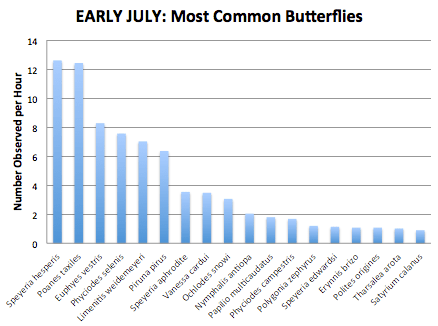
And all the way up to 76 per hour…
– – – – – – – – – – – – – – – – – – – – – – –

Then, rather suddenly, back to about 44 butterflies per hour. Clearly, July is butterfly month in the Colorado foothills.
– – – – – – – – – – – – – – – – – – – – – – –

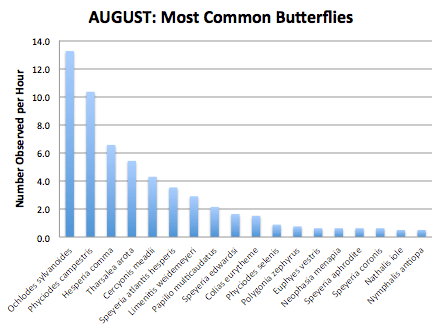
Or about 55 butterflies per hour.
By September, numbers drop to about 20 butterflies per hour in random habitats. But from late September through October and into November, butterflies can be found in large numbers on rabbitbush, Chrysothamnus nauseosus. On these bushes, I have found 145 butterflies and over 200 day-flying moths in less than a half hour. That’s an average of about 290 butterflies per hour!