
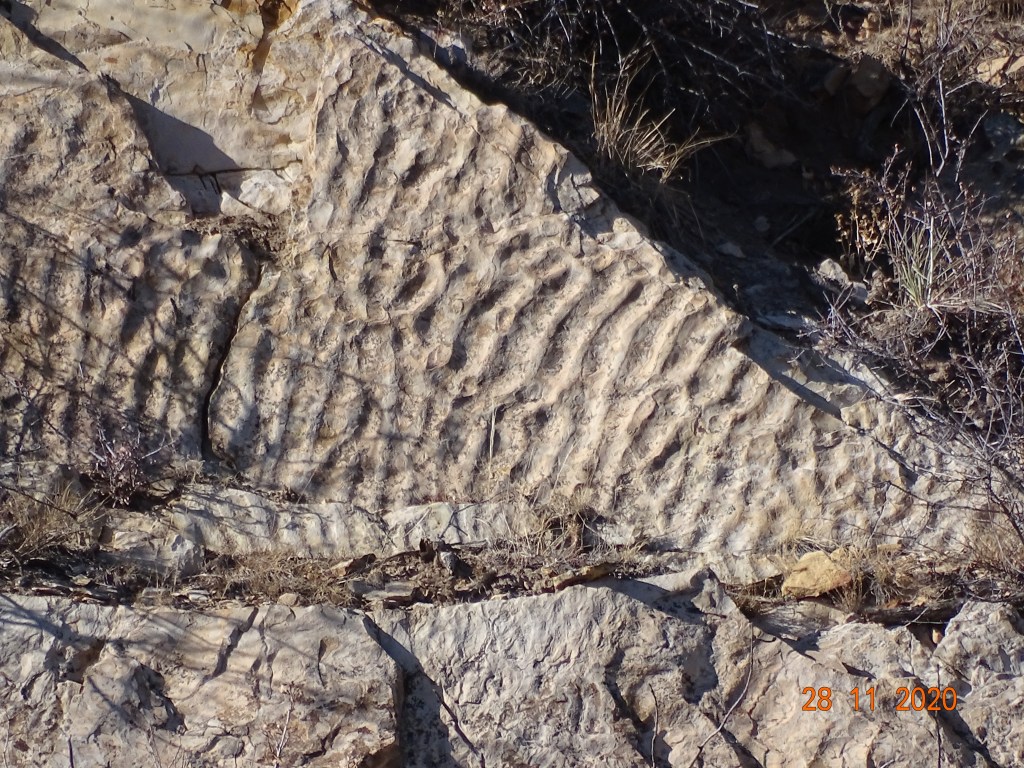
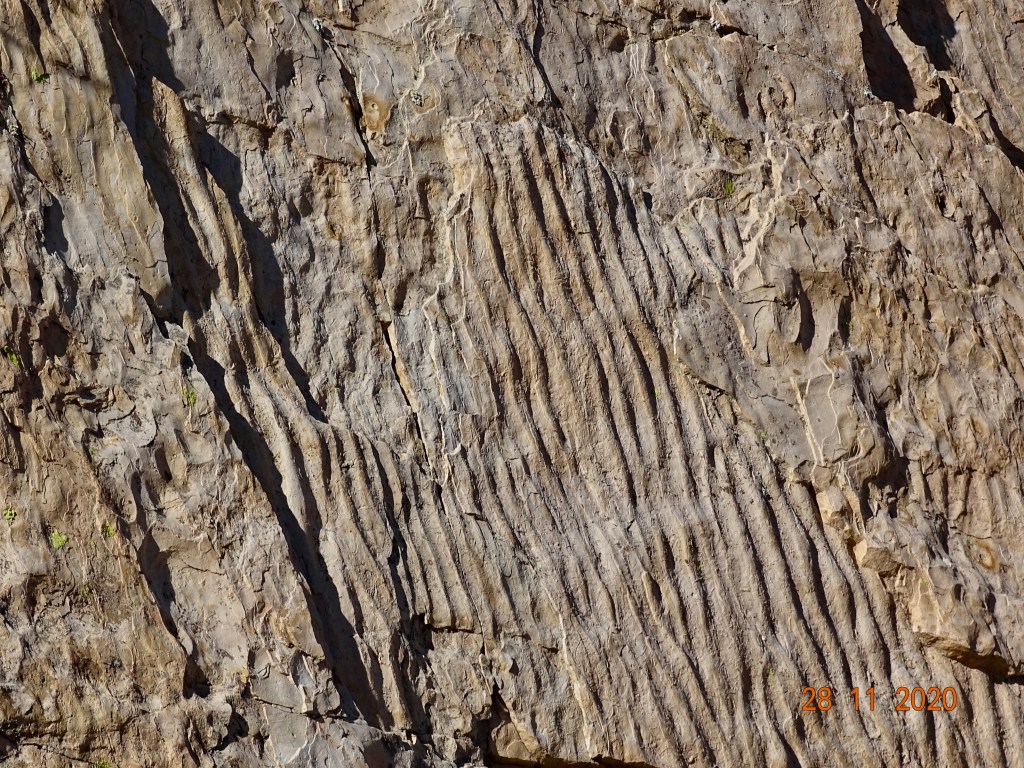
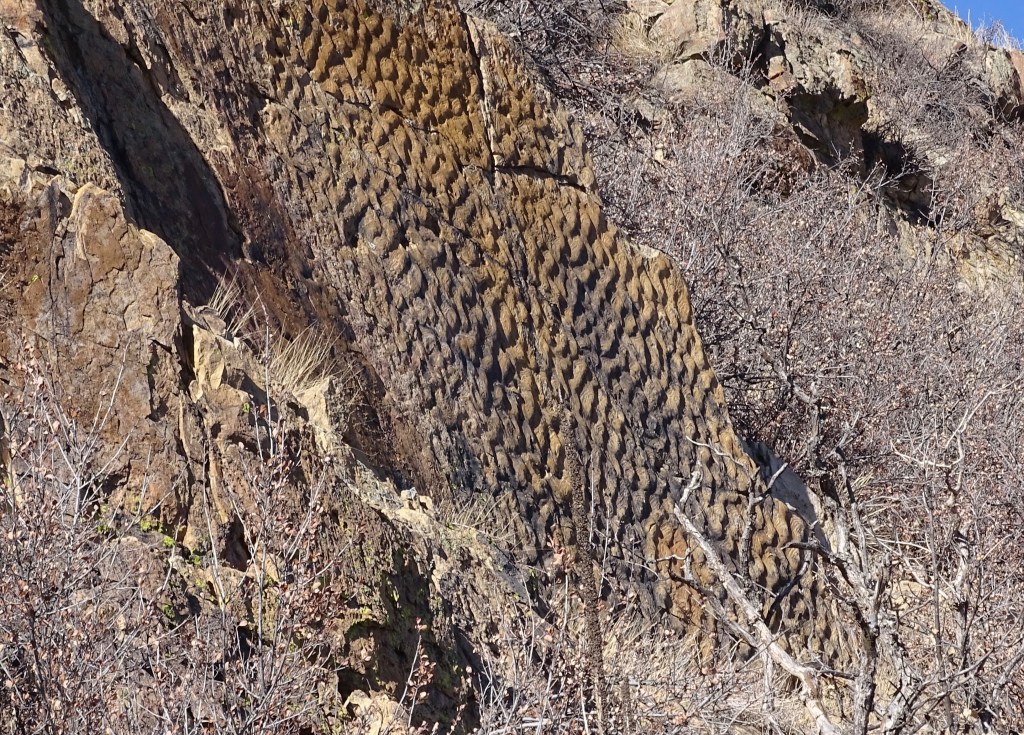
Hiking the extensive trail system that connects Red Rocks Park with Section 16, west of Colorado Springs, one encounters an impressive array of ripple-marked sandstones, a beach back in the Mesozoic, now dipping at almost 90°. The so-called “White Acres Trail” should have been named “Ripple Mark Trail.” The steep east-facing slope of the hogback seems to be Niabrara sandstone, but is backed on the west by Dakota SS, both of which form hogbacks. But how about these classic ripple marks?
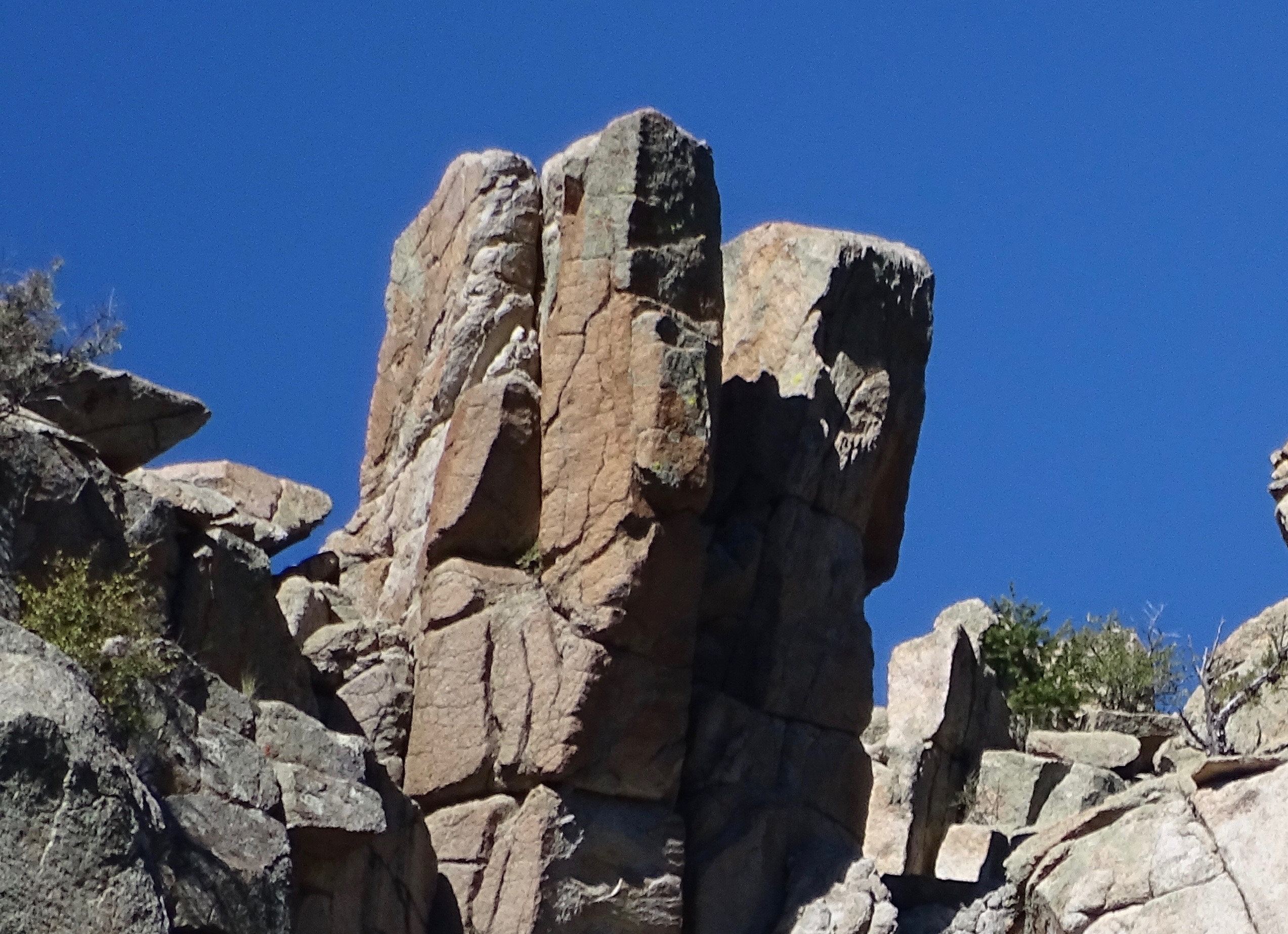
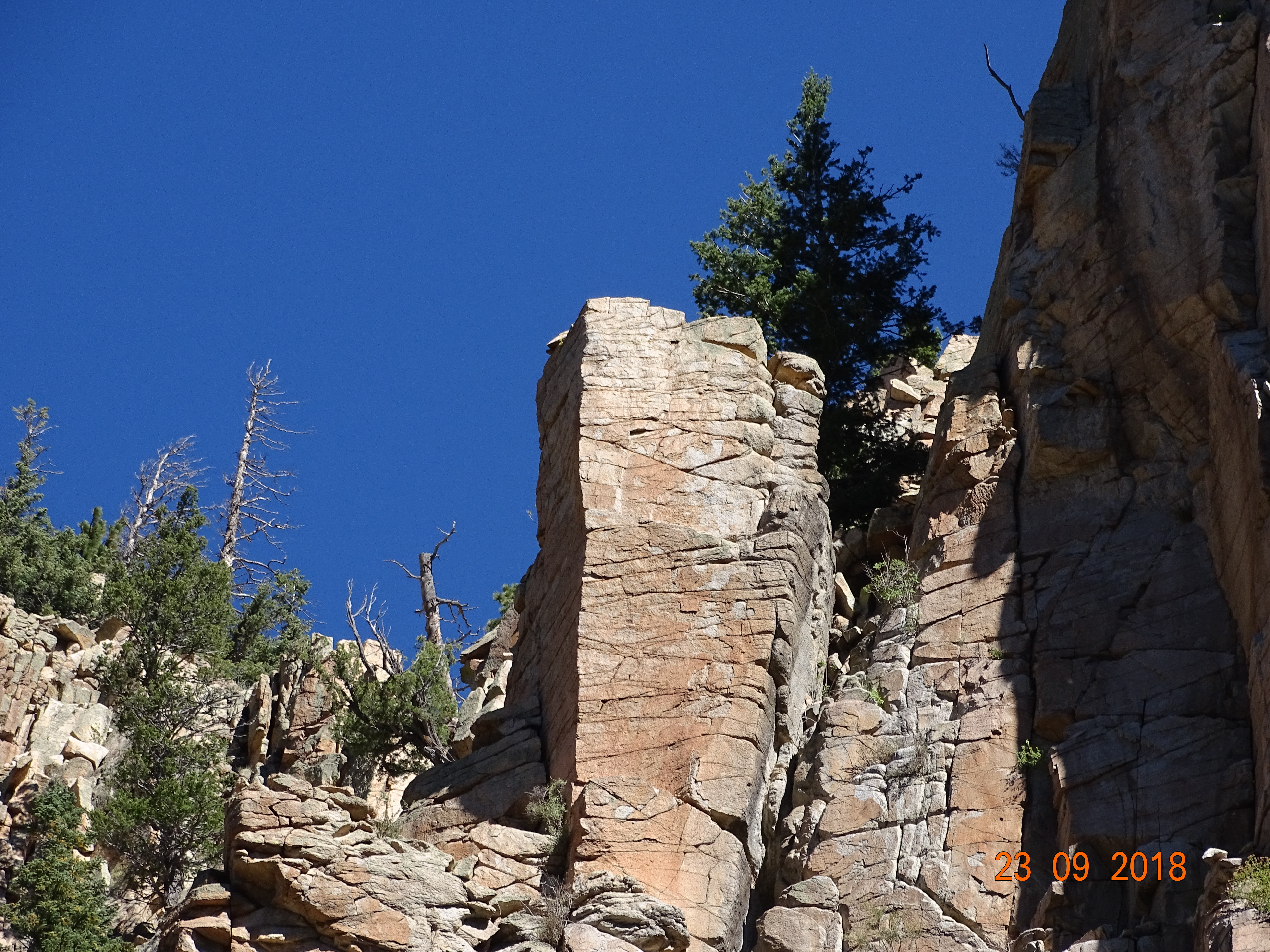
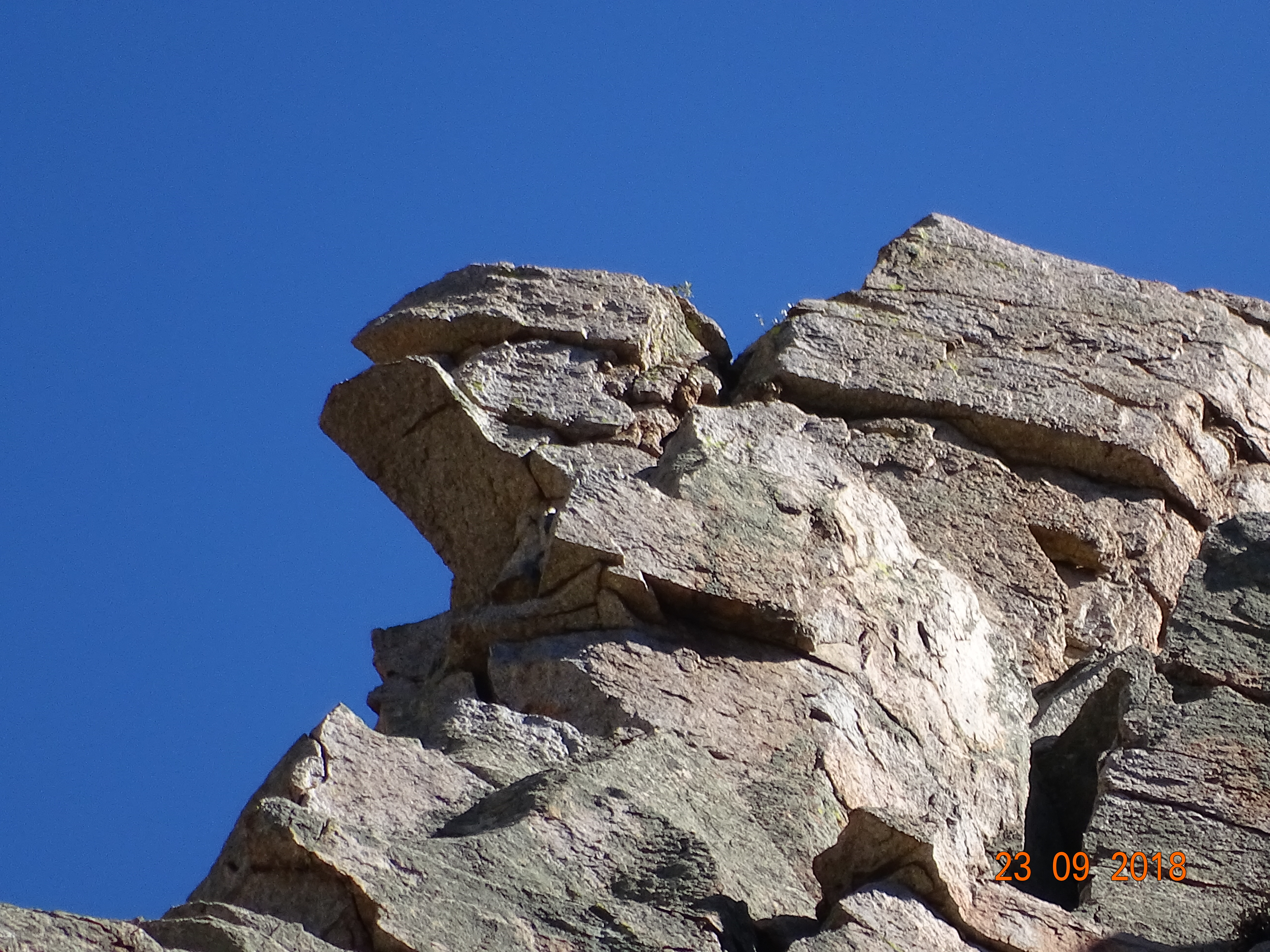
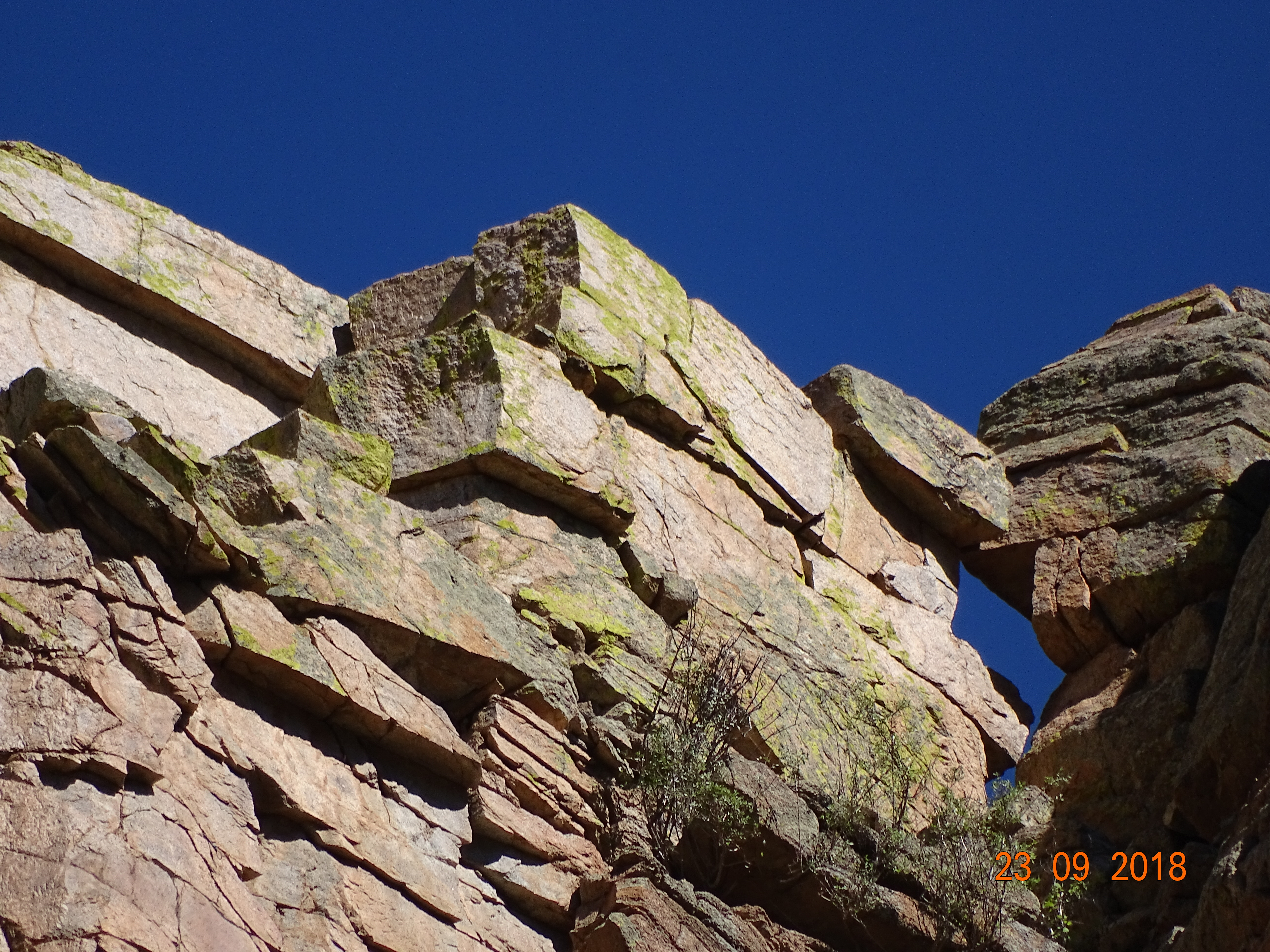
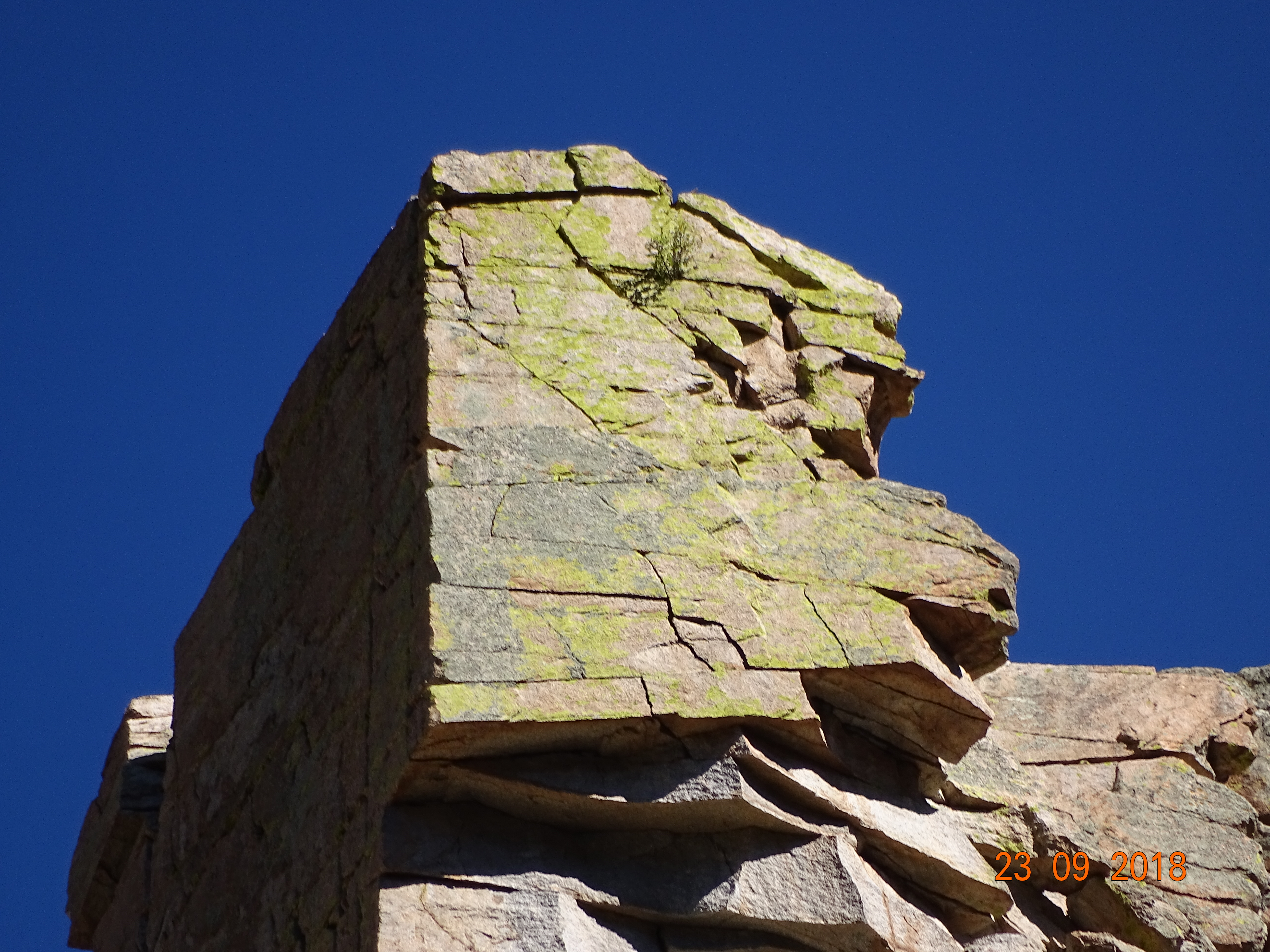
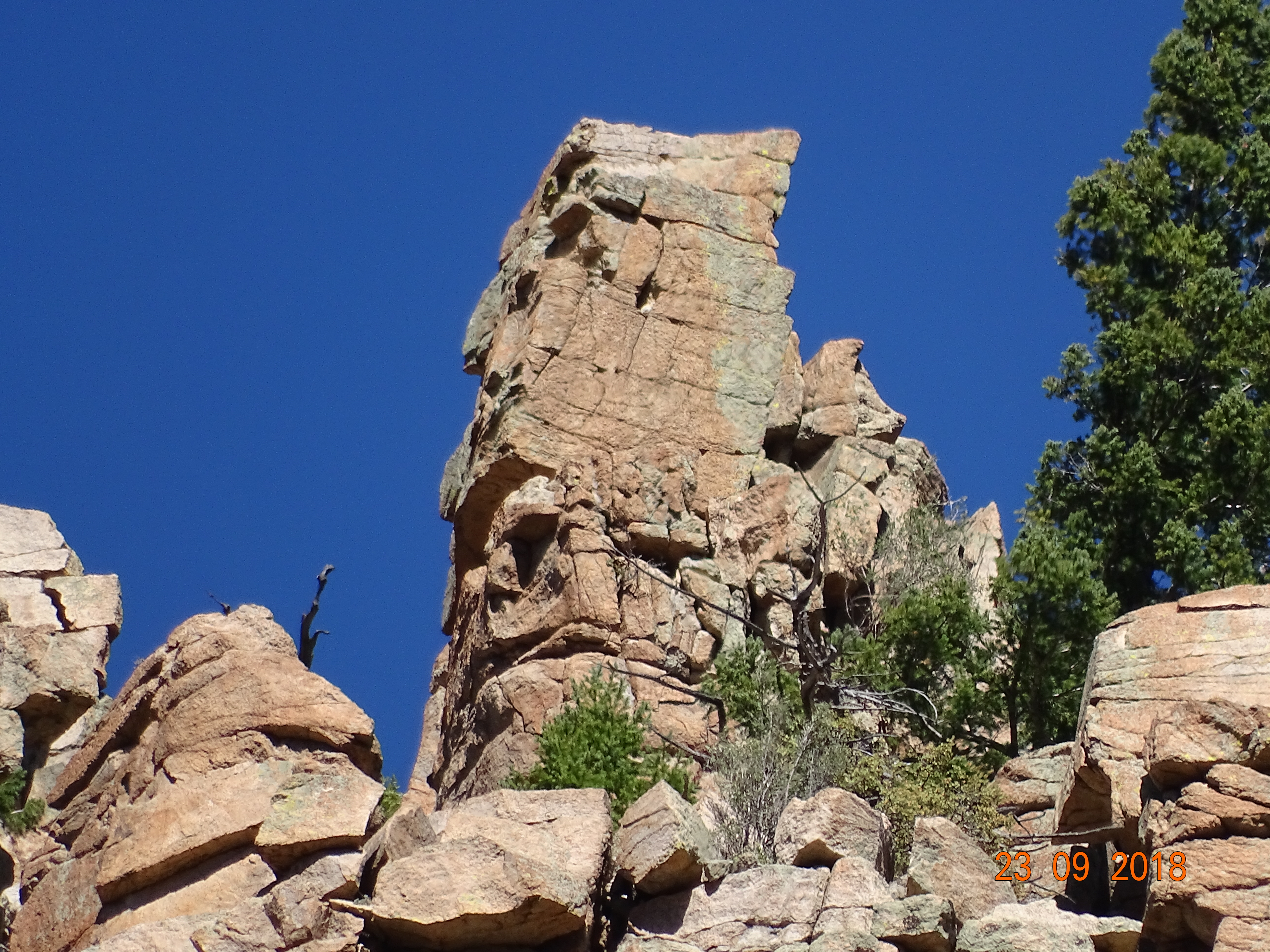
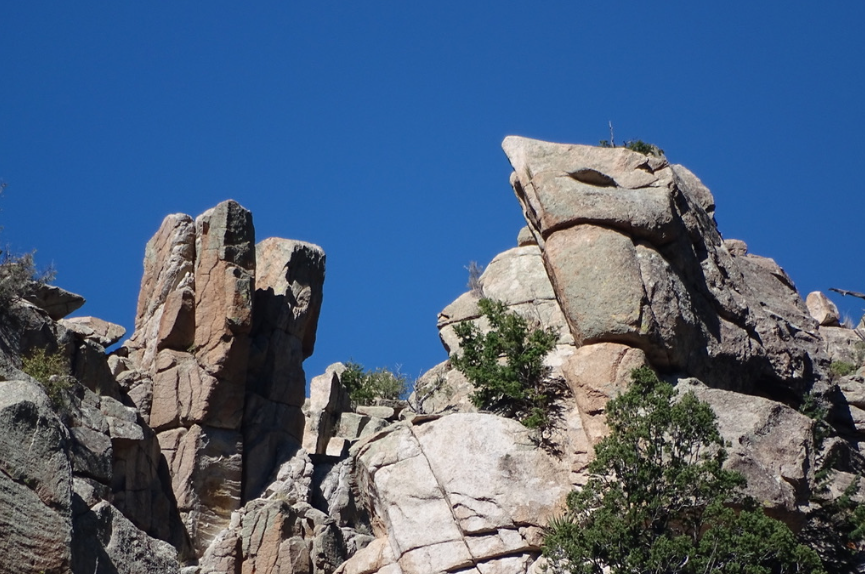
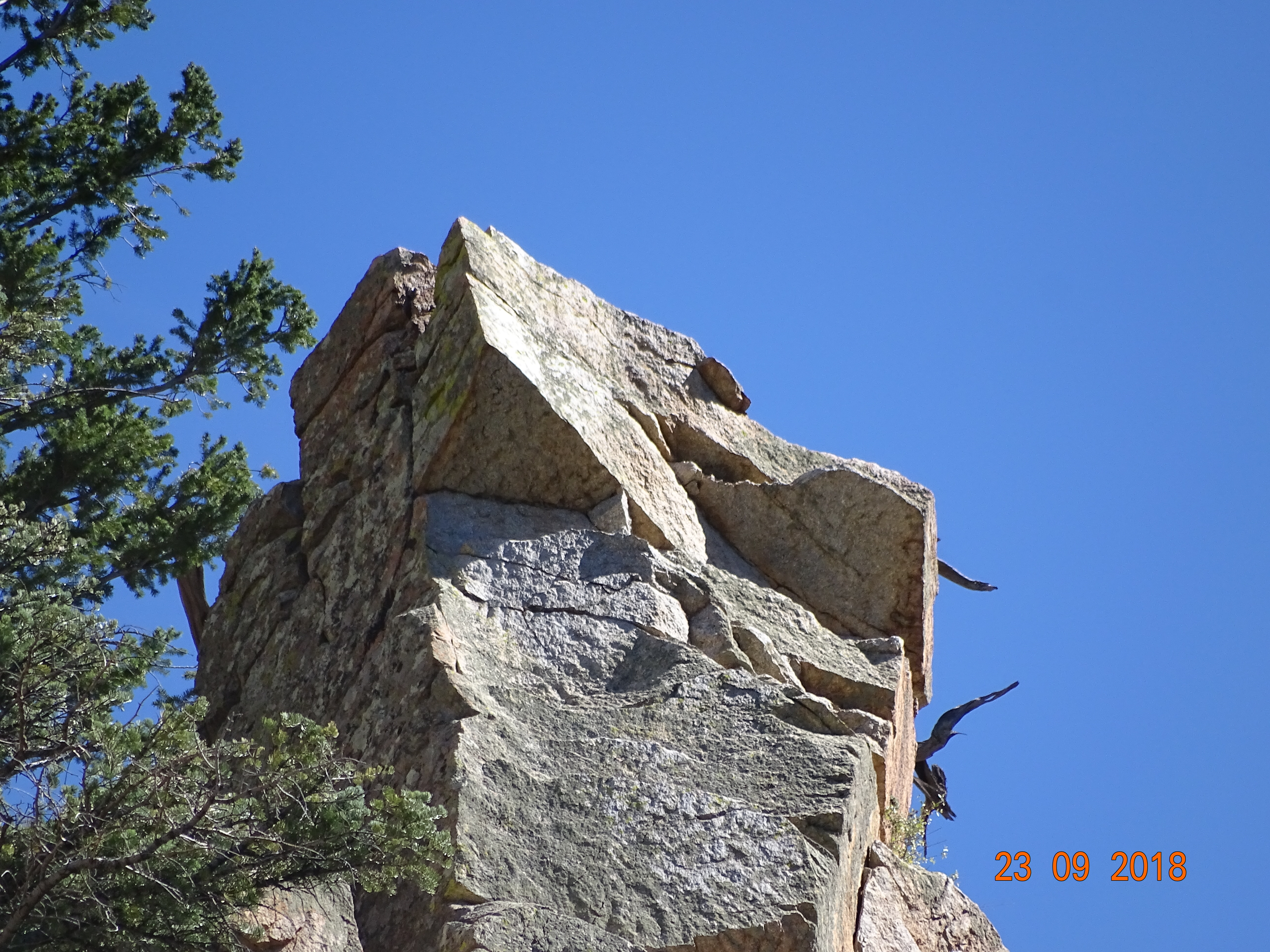
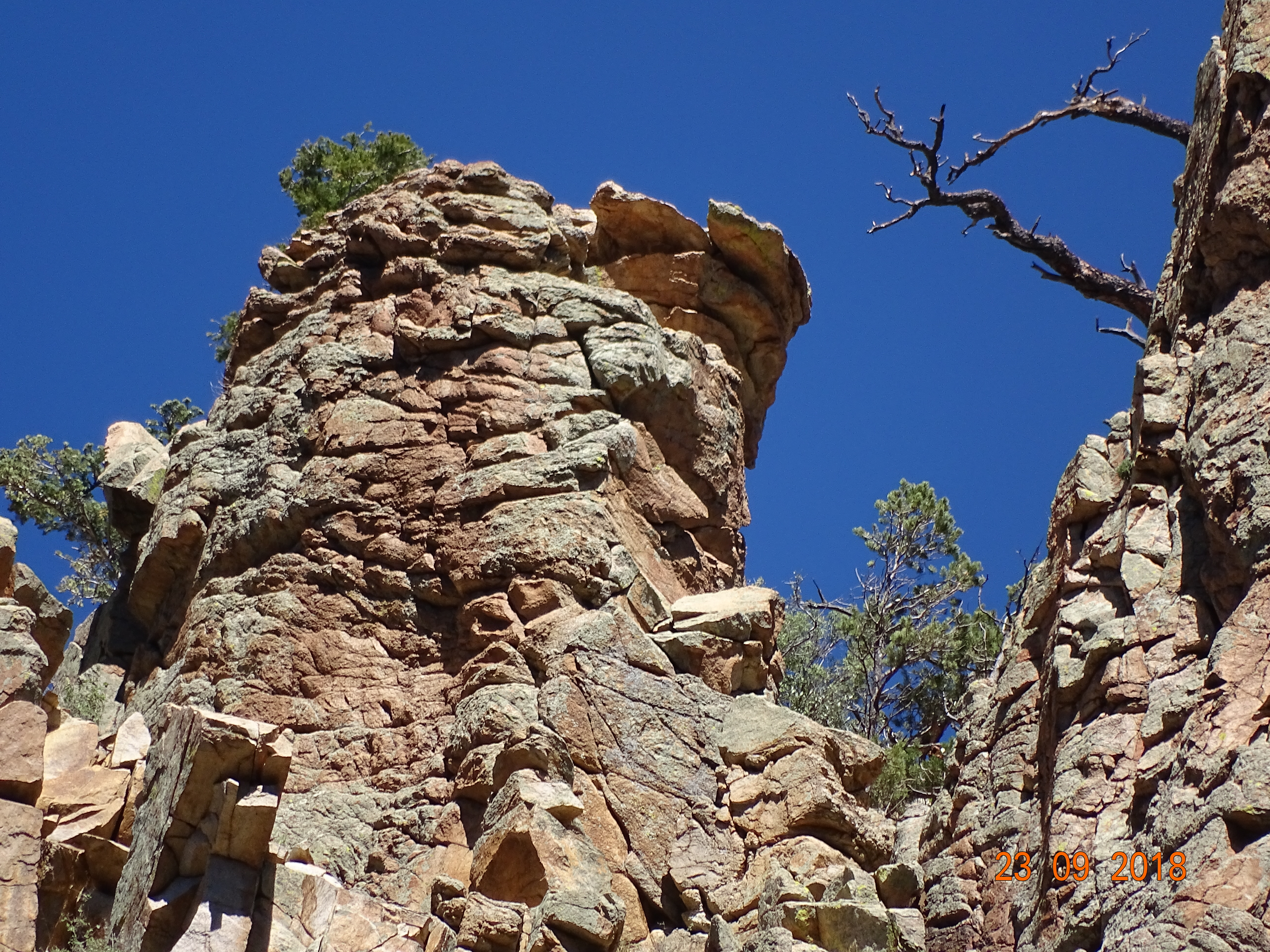
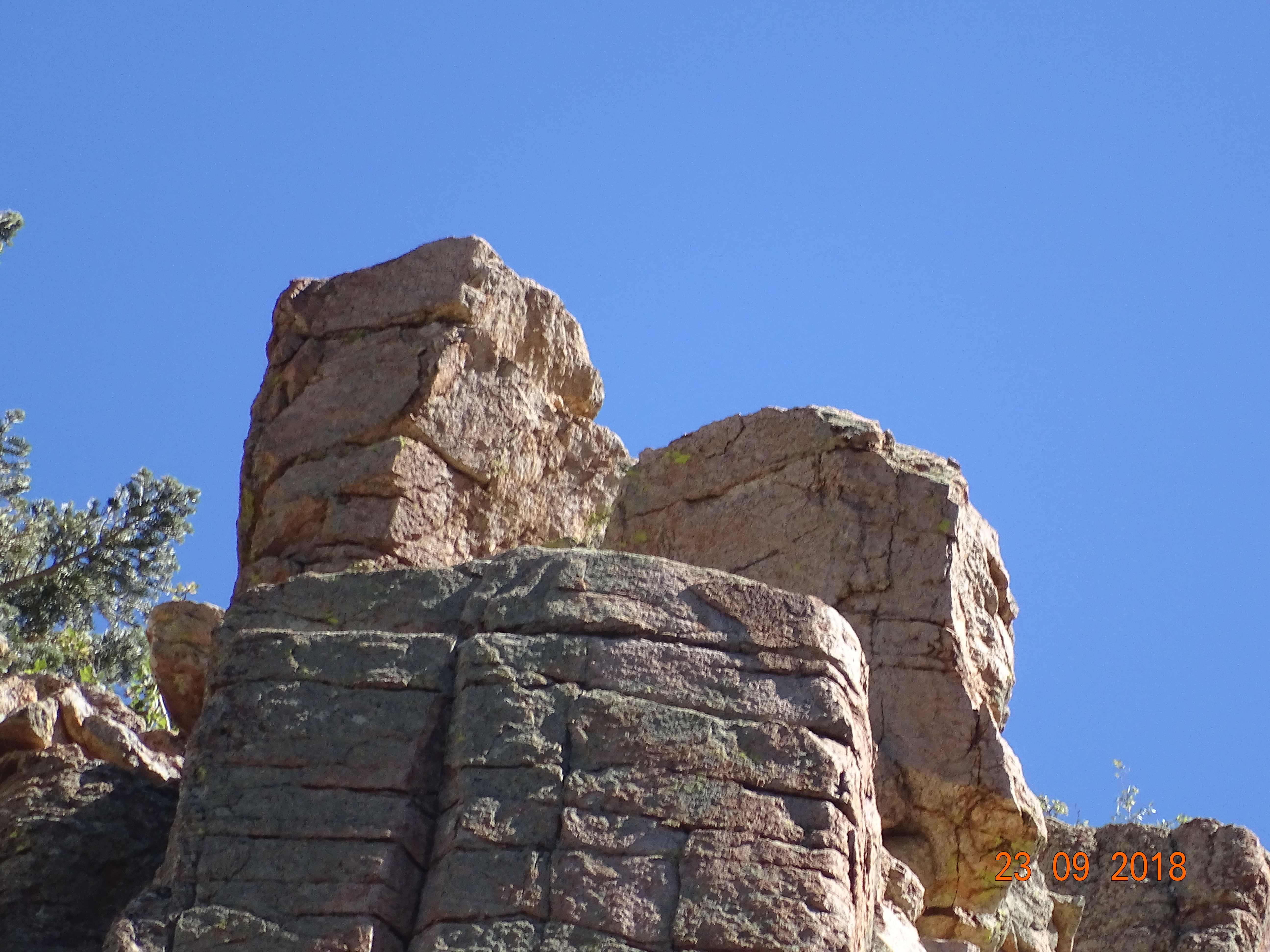
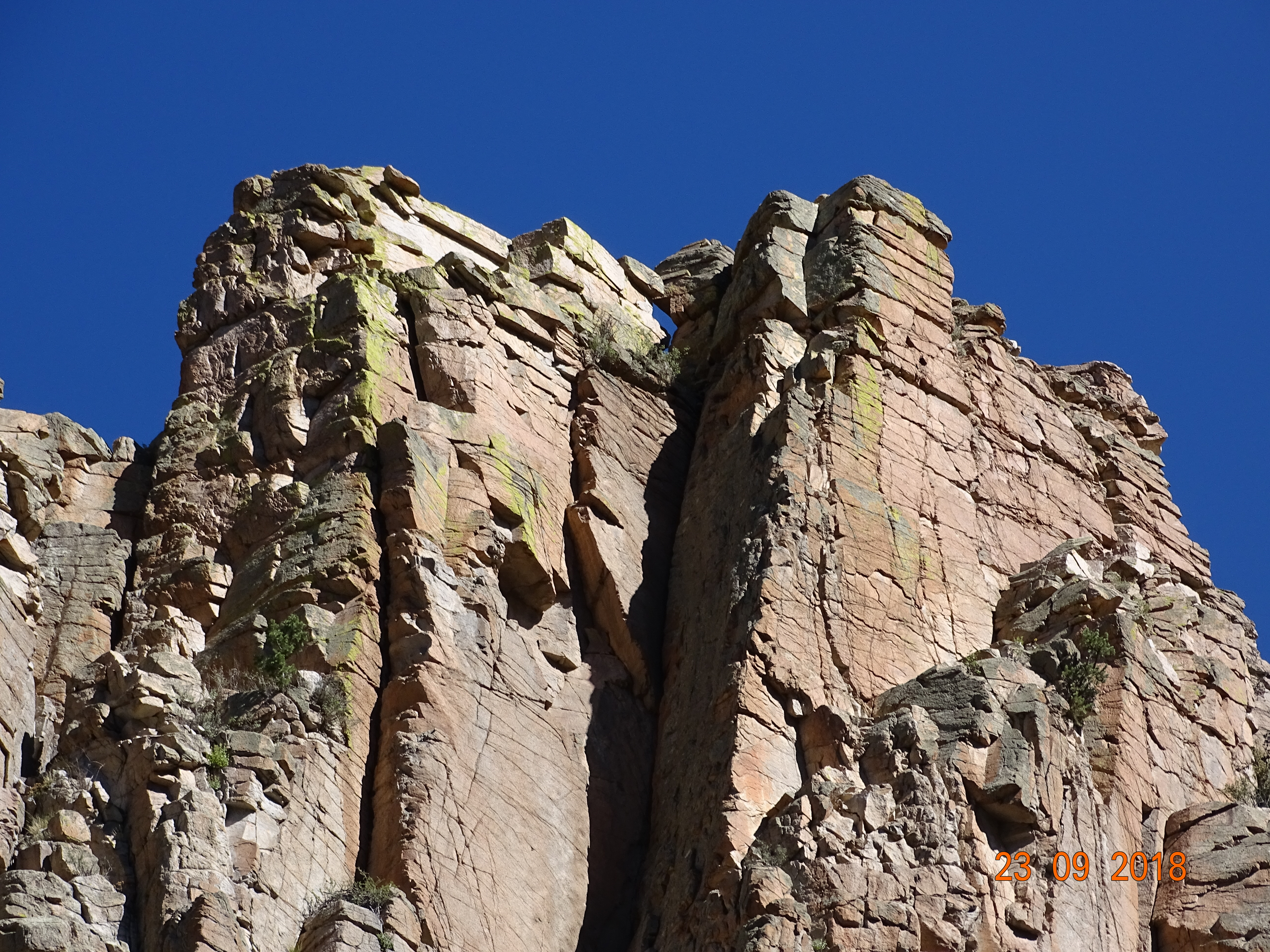
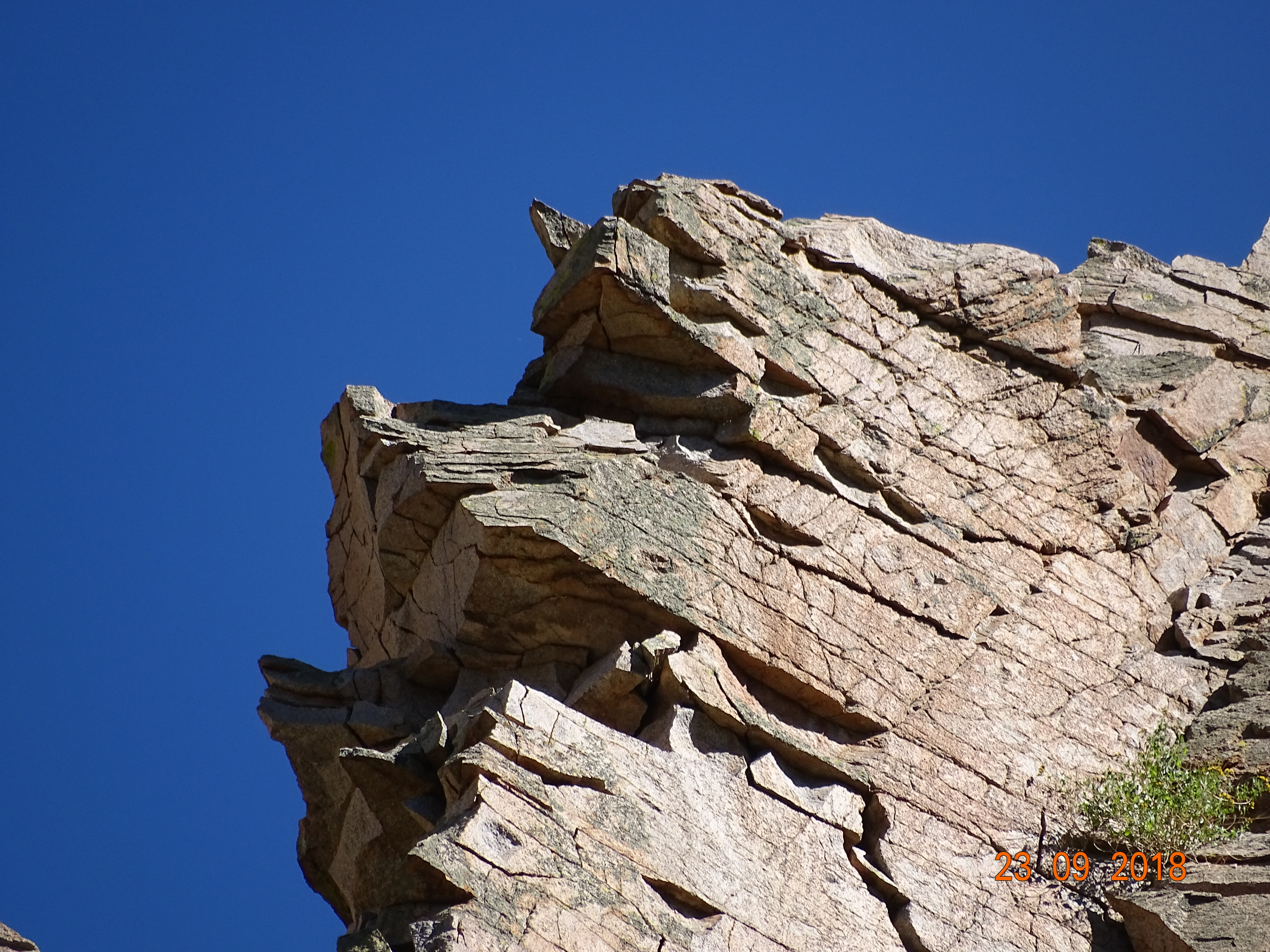
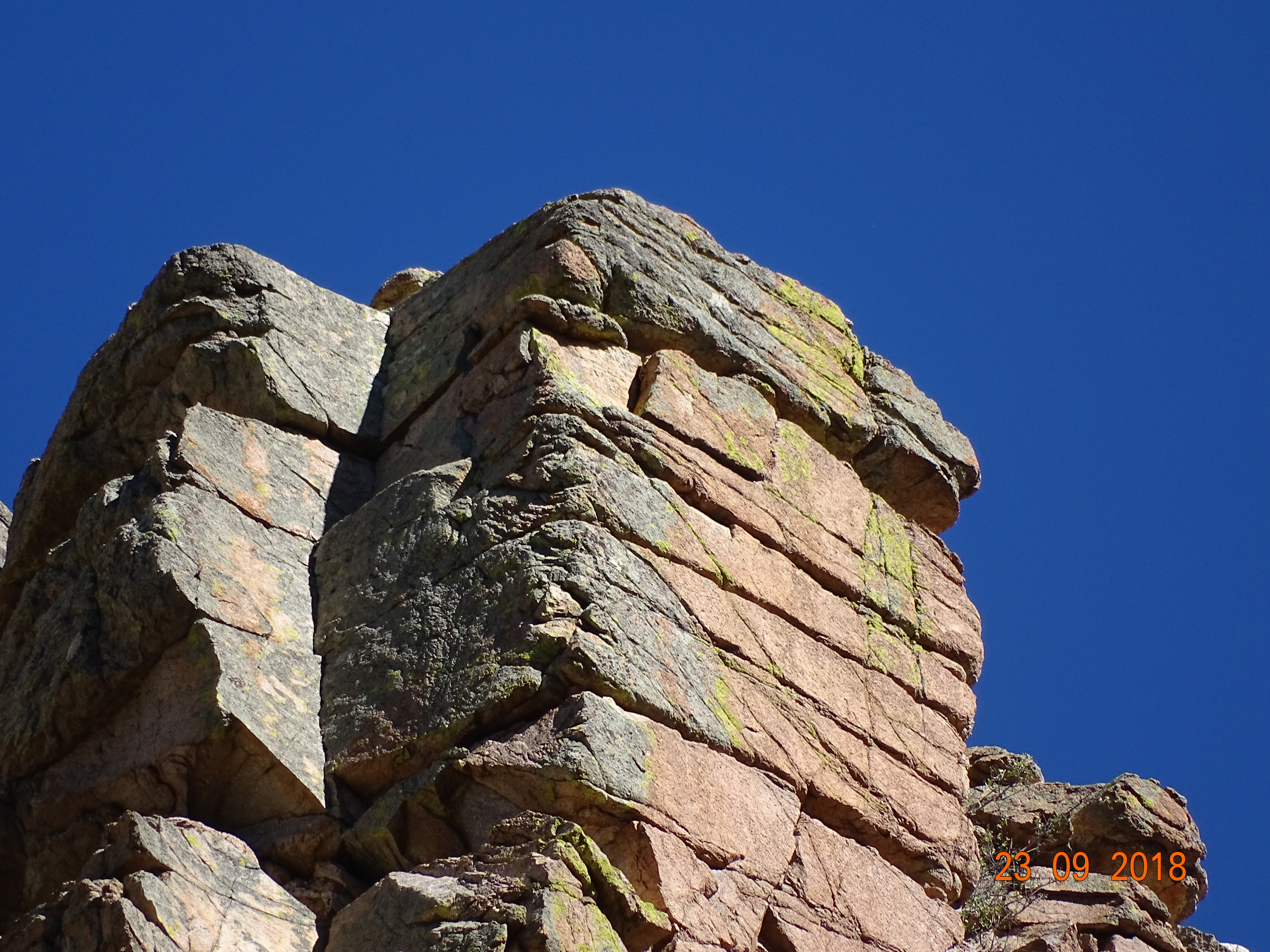
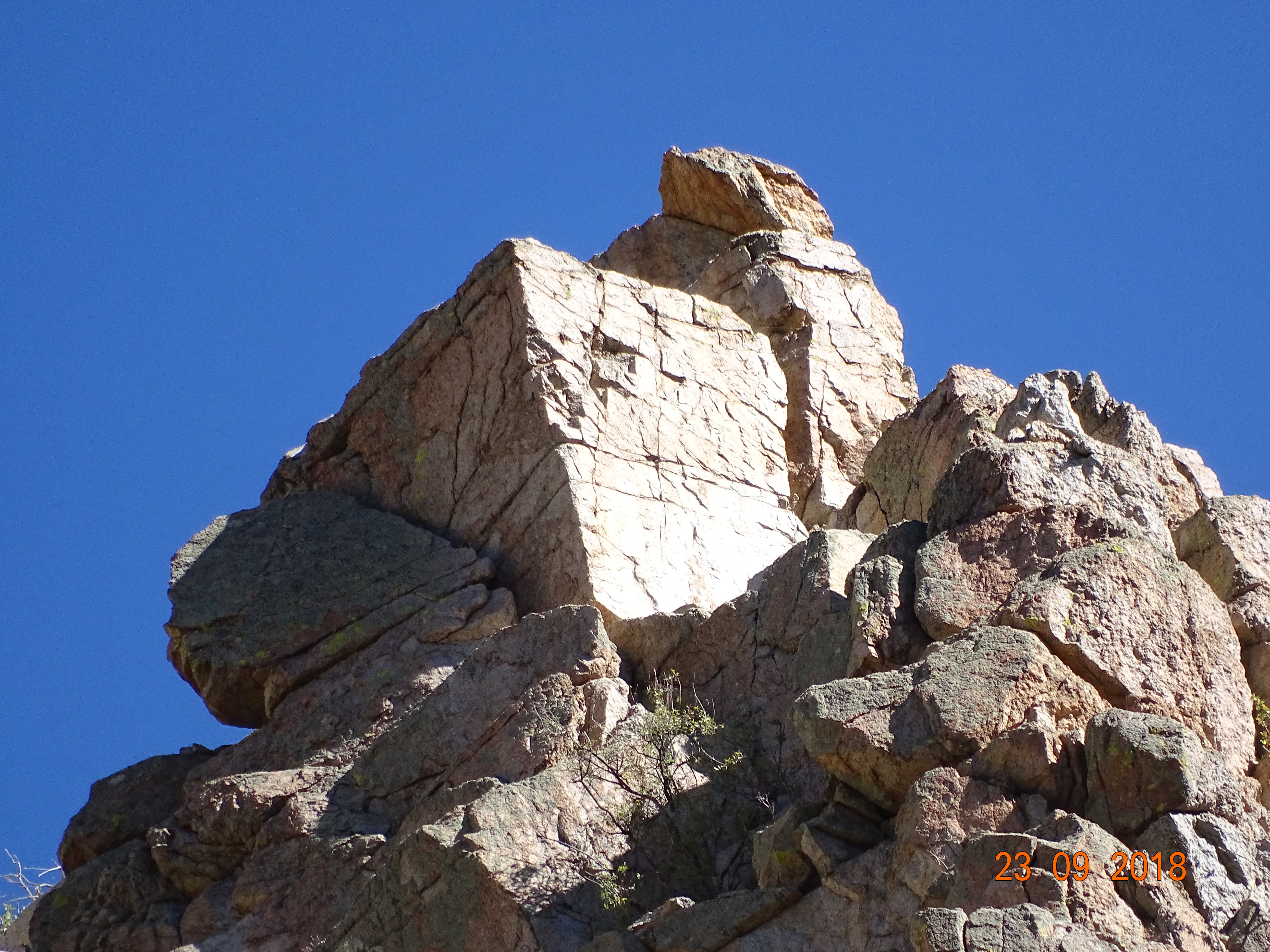
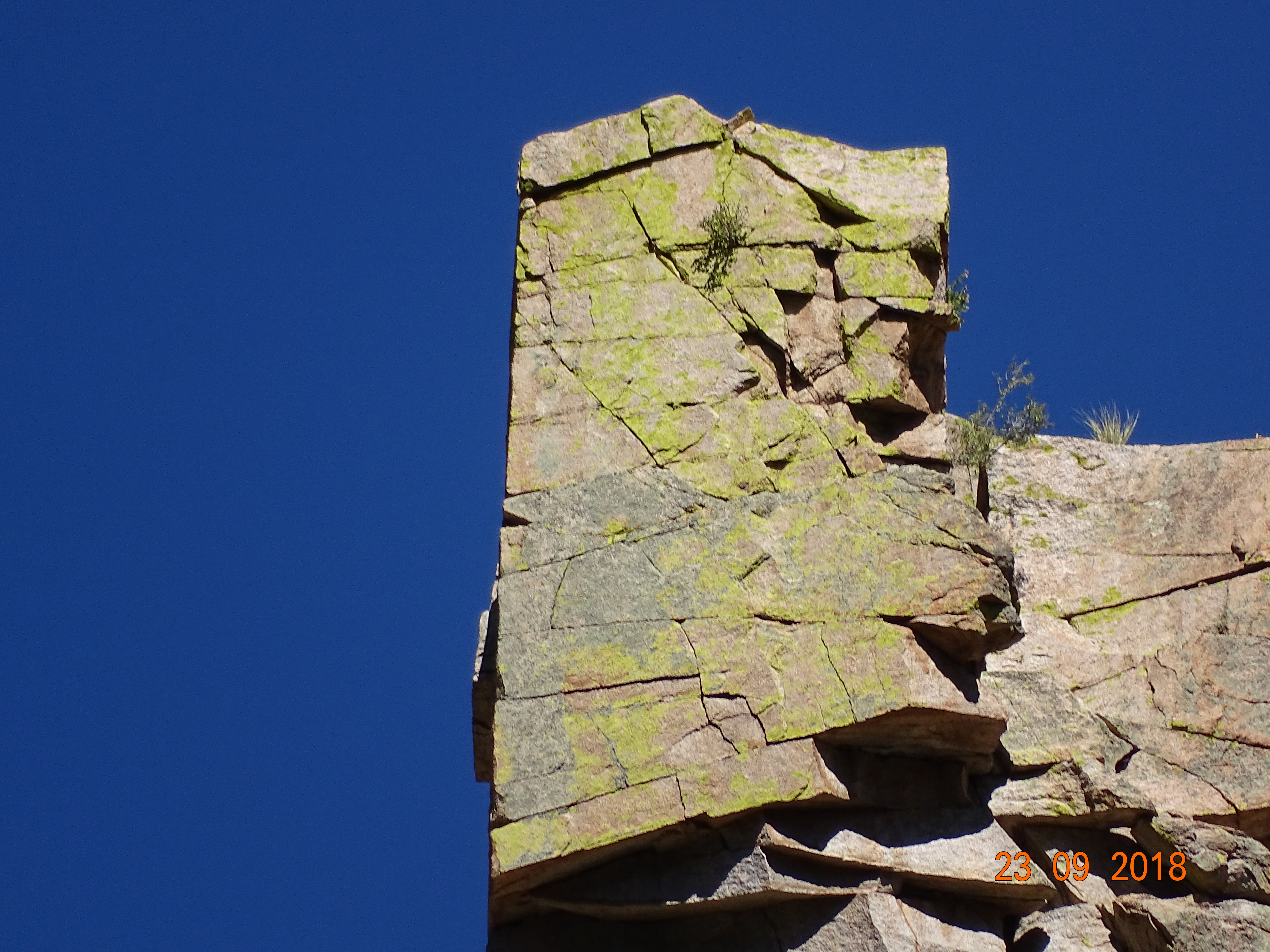
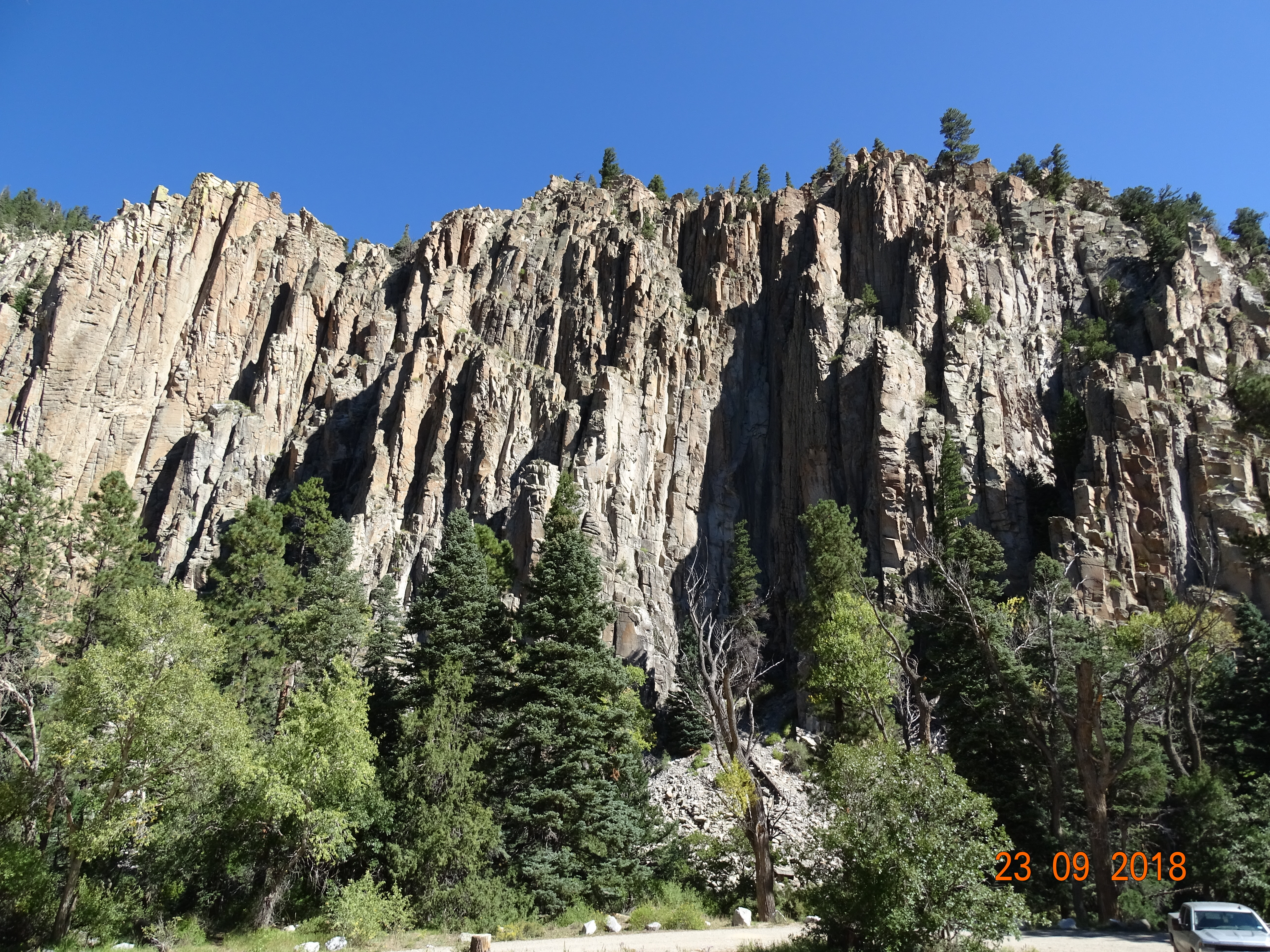 For those not tuned in to Southwest Geology, a sill is an igneous intrusive that has inserted itself parallel to the surrounding strata (a dike runs at angles to the strata). Palisade Sill is a huge intrusive in northern New Mexico between Raton and Taos on Highway 64. You won’t miss it when you head west into the canyon out of Cimarron. The sill is made of Monzonite, which is on the continuum between syenite (very light in color) and diorite (medium in color) and has plagioclase and orthoclase feldspars in approximately equal amounts. In short, it is a lighter than granite, but generally similar.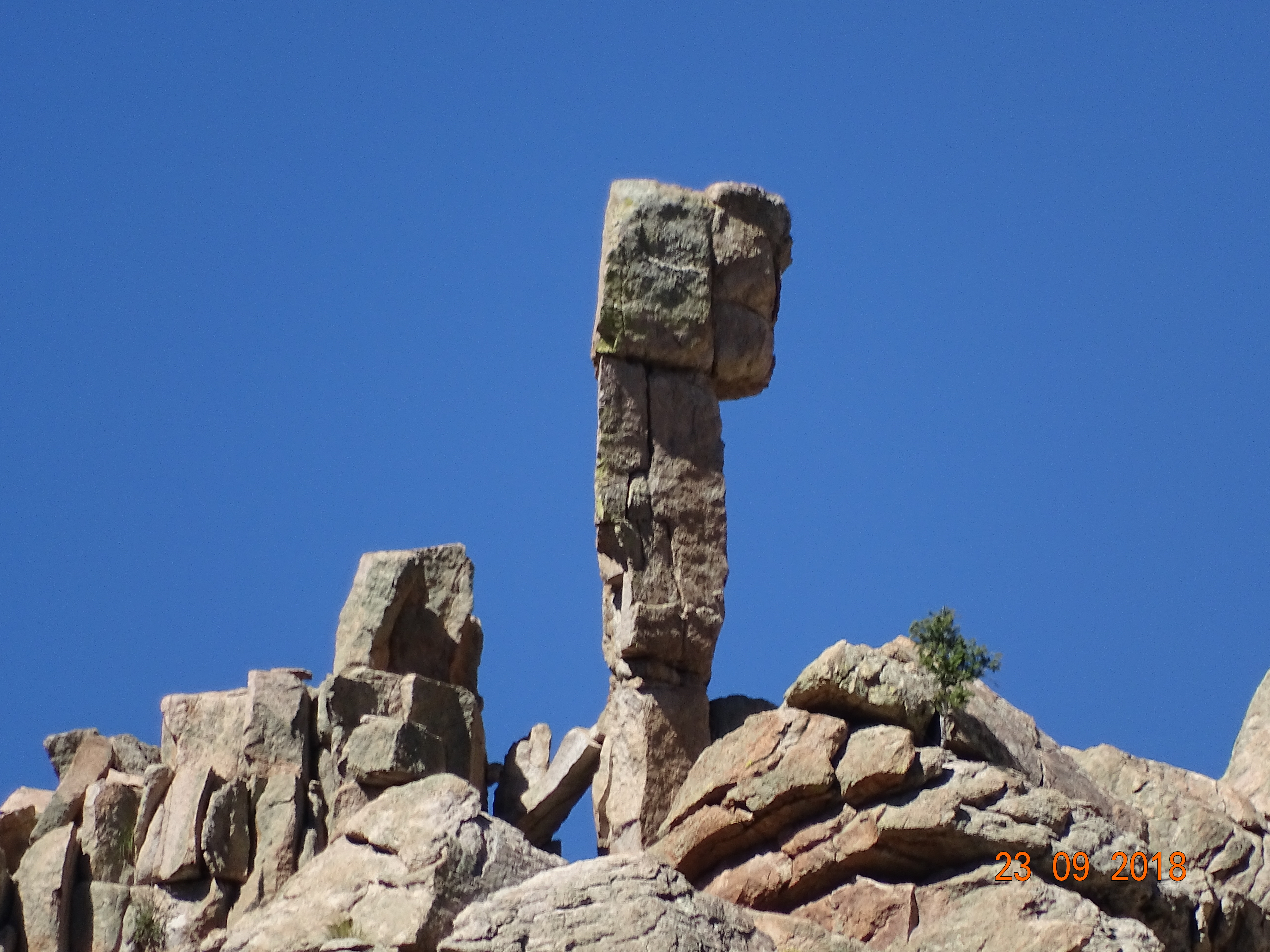
 mountainbreakfast