
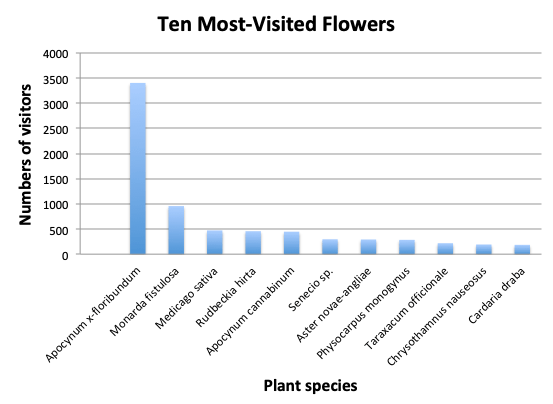
Here is a case in which a generally “obvious” fact is mathematically demonstrable. The premise is that if a butterfly requires nectar from only one particular flower species, it is an extreme specialist, whereas if a butterfly will accept nectar from any flower species, it is an extreme generalist. But it is also possible to distinguish the degree of specialization by extended observation of flower visits. I have made records of about 11,400 visits by 135 butterfly species to 110 species of flowers. From these data I have produced a graph that relates the number of flower species visited frequently by a butterfly (i.e. 10+ recorded visits) to the total number of flower species that that butterfly species visits. In case it’s not obvious, let me further clarify this.

This is a picture of specialization versus generalization in nectaring. Predictably and happily, the correlation, R2 = 0.936, suggests linearity. On average, butterflies that regularly visit only one flower species can be expected to ever visit only about 5 flower species, while butterfly species that regularly visit seven different species of flowers will be found to visit about 24 species of flowers in total. Remember, these are averages.
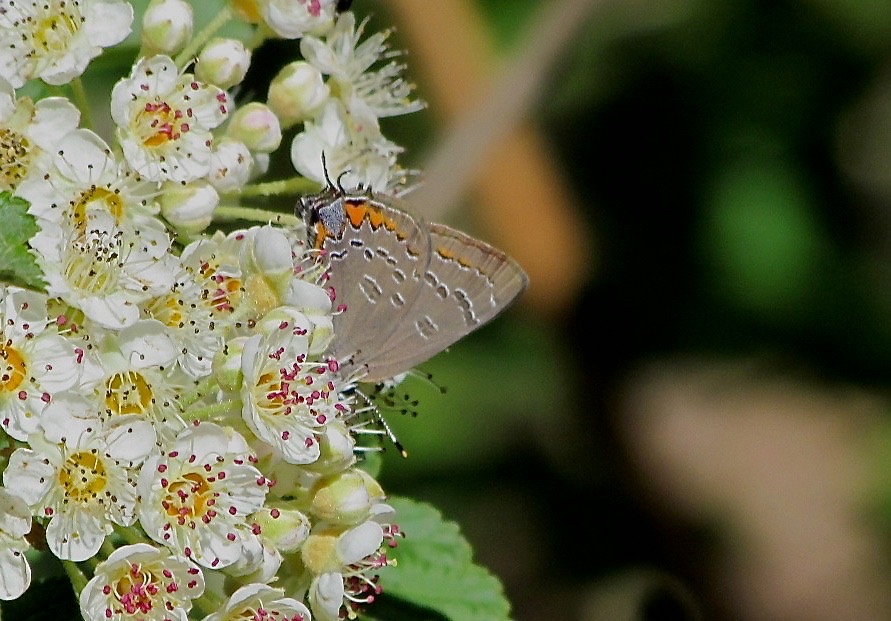
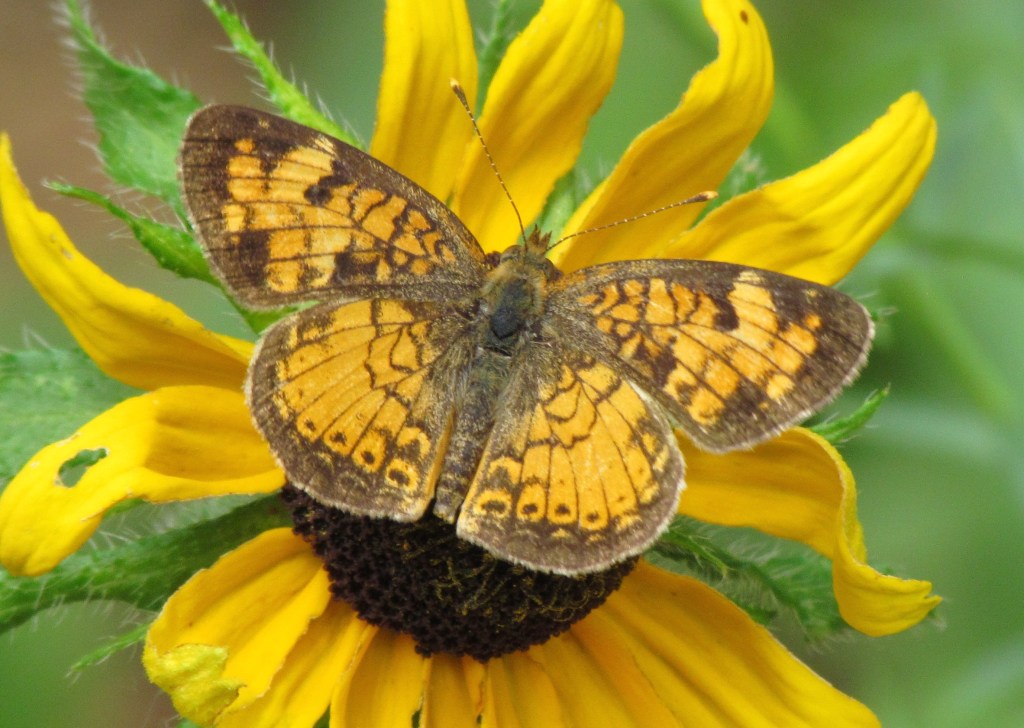
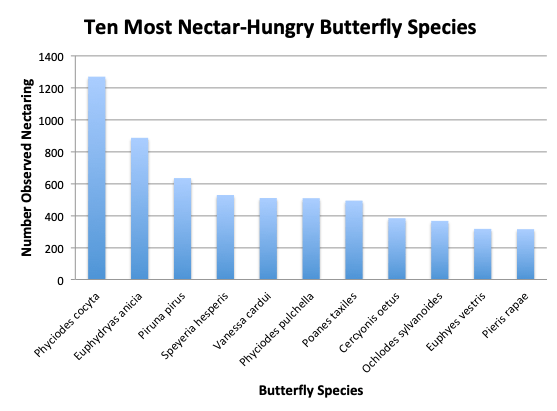
As examples, Oarisma edwardsi (Edward’s skipperling) feeds mainly from alfalfa, but may be found on three other flower species. In the middle ground, Satyrium calanus, (the banded hairstreak) commonly visits four flower species, but has been found on 13 total flower species. A still more extreme generalist, Phyciodes cocyta (the northern crescent) is frequently encountered on nine flower species, but also visits at least 18 other flowers.




 mountainbreakfast