
Author: Samuel A. Johnson
This blog is about hiking, thinking, and writing.
Remember Deep Thoughts?
A piece of Deep Thoughts music (Theme 63) to read by, and two Poems.


Butterfly Diversity
Recently I posted a summary of my 37 years of butterfly records for the Pikes Peak Region, showing a loss in numbers of butterflies. Mark Wilson raised the question of species diversity, wondering if it has remained stable or changed across these years. My regional data present a false impression of diversity loss because of sampling bias. During the first 27 years I visited many sites in the region, while during the last ten years I focused mainly on Bear Creek. One site won’t normally have as many species as the whole surrounding region. But I have robust data from Bear Creek during the 22 years from 1998 through 2020, during which I recorded both the number of butterflies per hour and the number of species observed. These Bear Creek data taken alone show a slight negative trend. First, the graph of 167 data points across all the years.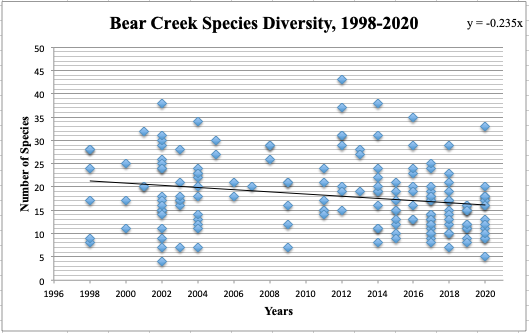 This shows a negative slope from 21 down to 16 species. When all the data points from each year are averaged, the trend is very similar,
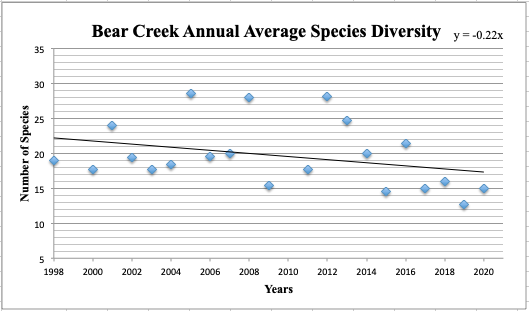 showing a decline from 22 to 18 species across these 22 years.
There is little doubt that as time passed I became more practiced at butterfly field identification, and thus might have been expected to find more species, not less. But the data indicate that the average walk in the woods in 2020 will not turn up as many species as it did in 1998. This trend is disturbing. I hope someone can find a flaw in my reasoning.
Update on Butterfly Numbers
This is a summary of my 37 years of data on the butterflies of the Pikes Peak Region. The following graphs show trends in abundances as measured by butterflies observed per hour afield. Each data point is a record of the number of butterflies observed per hour of observation time. First, the whole data set for the Pikes Peak Region, with tons of scatter: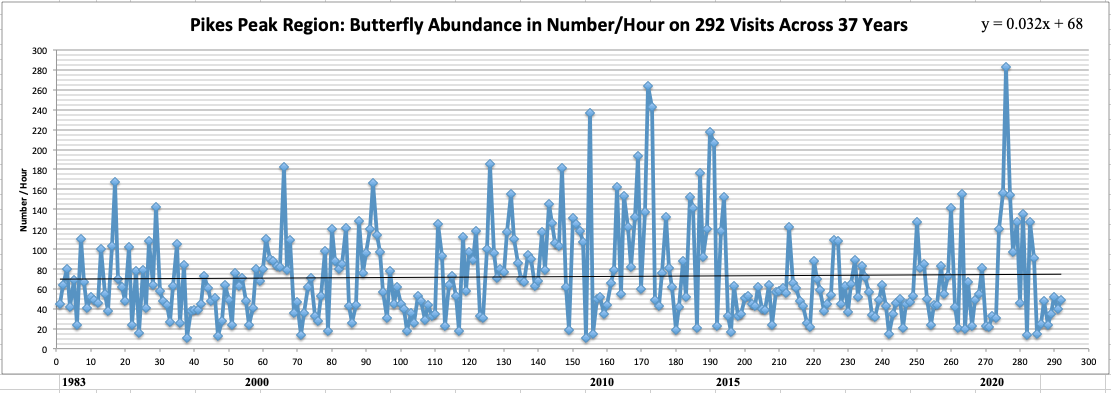
This shows an almost flat line, but slightly increasing (from 69/h to 78/h). But when I restrict the data to only Bear Creek, where I have spent most of my time, we find: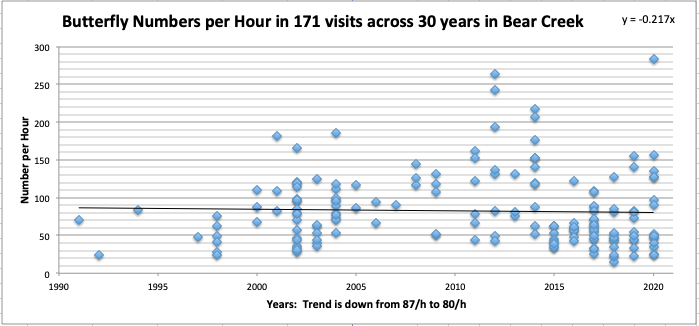 a negative slope (from 87/h to 80/h). And when graphed according to the average number per hour for each year, we get:
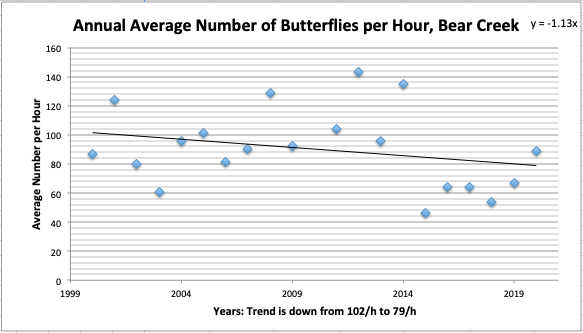 a more negative slope (from 102/h down to 79/h). This is surprising to me, as 11 years at an Austin Bluffs site shows no such decline:
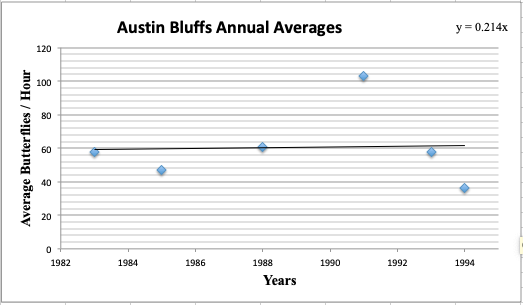
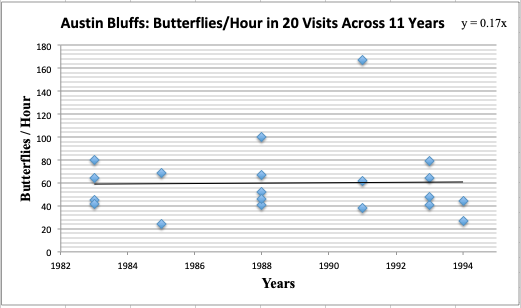 even when plotted according to annual averages:
 I also created box and whisker plots for the numbers of butterflies per hour for each summer month in Bear Creek!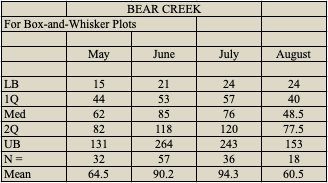
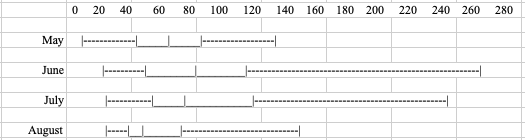
In sum, butterfly numbers appear generally stable in this region, but further study is always needed as we enter a hotter earth with more fires.
Two New Songs
Theme 124:
Theme 128:
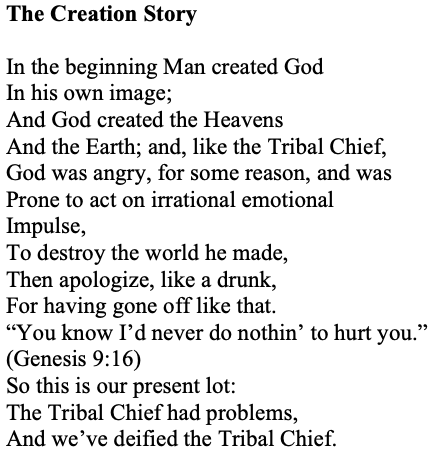
The Creation Story
Poems and Songs
A couple of new poems and songs from June and July 2020, courtesy of Covid-19.

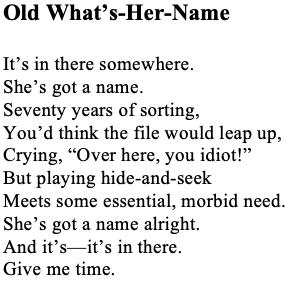
Good old Theme 122:
And Theme 123: This one actually makes me laugh in the middle.
A Father’s Day Poem and a New Piece of Music

And Theme 119, with drums.
Two short pieces
If the first is too frenetic for your taste, the second will calm you back down. Theme 116, then Theme 115:
Listen to this while you read about my new Colorado butterfly.
Theme 113, with a flute and trombone.
![Zizula cyna [STATE RECORD]](https://mountainbreakfast.com/wp-content/uploads/2020/05/saj-label-zizula-cyna.jpeg)
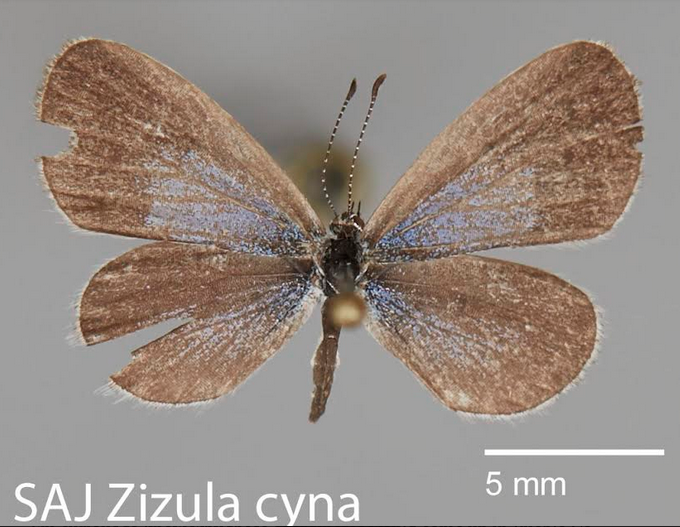
My new butterfly record is of Zizula cyna, a tiny subtropical blue that should not be here. It was taken near the Section 16 Trail, as the label says. I will go back this summer to see if it might persist in that environment. It is not particularly unusual to find stray subtropical butterflies in Colorado, but one this tiny is hard to imagine. Perhaps it came on a car with travelers, but if so, it flew hundreds of yards to the locality in which I found it. So, maybe…
 mountainbreakfast